
Complete Assignment for Consideration Prevails Over Conditional Agreement for Transfer of Future Shares: Bombay High Court
Mohd Malik Chauhan
16 Jan 2026 6:33 PM IST
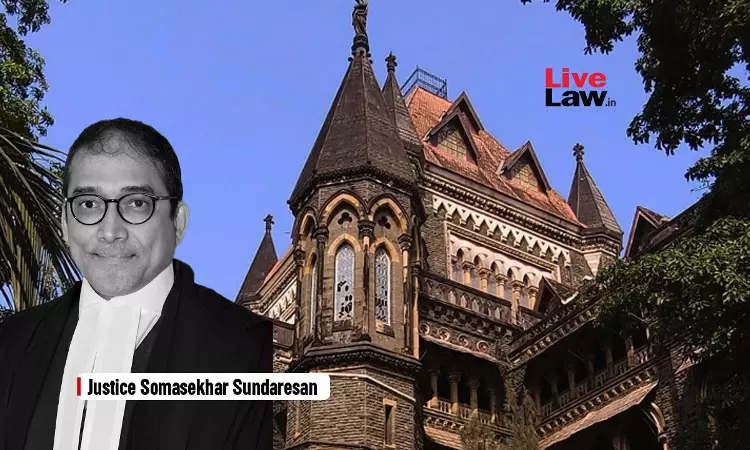
The Bombay High Court upheld an arbitral award involving a long-standing family dispute over shares in a demerged company.
Justice Somasekhar Sundaresan held the arbitral tribunal's decision—that a later sale to a bona fide purchaser takes precedence over an earlier conditional arrangement—to be a plausible and well-reasoned conclusion.
Background:
The dispute arose from intra-family transactions within the Somani family concerning entitlement to 9.06% equity shares of Shreeniwas House and Abode Ltd., a company to emerge from the demerger of Shreeniwas Cotton Mills Ltd.
The Petitioner, Ramesh Somani, relied on an agreement executed in 2011 under which brother Rajesh Somani agreed to transfer his future entitlements to shares in the demerged entity for a consideration of Rs. 4 crore. Ramesh had already paid Rs. 2 crore upfront with the balance repayable after the shares came into existence.
However, in December 2012, Rajesh entered into a separate agreement with Vijay Somani under which he received Rs. 8 crore upfront, transferred all his existing rights, title and interest including possession of 400 sq. ft. office premises in Shreeniwas House, and assigned all present and future entitlements flowing from earlier arrangements with the Lodha Group. This transaction was challenged by Ramesh before the arbitral tribunal contending that it was illegal.
The Arbitral Tribunal rejected Ramesh's claims holding that the 2011 agreement executed with Ramesh was conditional and limited to future shares and did not amount to an assignment in praesenti. It further observed that the 2012 agreement executed between Rajesh and Vinay was a comprehensive document transferring all existing and future rights for consideration.
Challenging the above decision of the arbitral tribunal, the petitioner contended that the arbitral tribunal committed an error by relying on transfer of office premises and ignoring vital evidence suggesting Vinay's knowledge of the 2011 agreement.
Findings:
Rejecting the challenge, the court observed that section 34 of the Arbitration Act does not permit re-appreciation of evidence and substitution of a plausible view taken by the arbitral tribunal.
It further held that the tribunal was fully justified in examining the 2012 agreement and transfer of office premises as these were integral to deciding the nature of rights transferred.
“The finding that the 2012 Agreement was a much wider Agreement would not mean that the Learned Arbitral Tribunal exceeded its scope. The Learned Arbitral Tribunal was fully entitled to compare the competing considerations that were clamouring for favourable consideration by the Learned Arbitral Tribunal, between the two instruments, in order to adjudicate the disputes between the parties.Likewise, the Learned Arbitral Tribunal's reference to and reliance on the sale of office premises does not result in the Learned Arbitral Tribunal having gone outside the scope of the reference to arbitration as set out in the Reference Order”, the court held.
The court further observed that the view taken by the arbitral tribunal that the 2012 agreement was an assignment in praesenti, while the 2011 agreement related to future shares only was a plausible, reasonable and well supported by evidence.
It observed:
“The finding that the transaction between Vinay and Rajesh explicitly covered the existing rights, which would lead to the emergence of future rights, cannot be faulted. The 2012 Agreement constituted a complete assignment. The Learned Arbitral Tribunal held that the mere use of the word “assigned” in the 2011 Agreement between Rajesh and Ramesh would not mean that there was an assignment in praesenti between them, when it is Ramesh's own case that nothing was payable unless and until the shares actually emerged.”
On constructive notice, the court upheld the findings of the arbitral tribunal holding that since Vinay was a bona fide purchaser without any notice of the prior transaction, his transaction was valid.
It held that “the Learned Arbitral Tribunal's view that the principle of Vinay being a bona fide purchaser for value without notice would apply to his purchase, since there was an explicit finding that Vinay did not have any specific or constructive notice of the alleged prior transaction, is also a finding based on the appreciation of evidence.”
Accordingly, the court dismissed the present petition holding that there was no infirmity in the impugned award.
Case Title: Ramesh Venkateshwar Somani v. Rajesh Somani & Ors.
Case Number: COMMERCIAL ARBITRATION PETITION NO. 210 OF 2023 ALONG WITH INTERIM APPLICATION NO. 379 OF 2025 IN COMMERCIAL ARBITRATION PETITION NO. 210 OF 2023
Citation: 2026 LLBiz HC (BOM) 28
Judgment Date: 07/01/2026
Appearance:
Rahul Narichania, Senior Advocate; Siddharth Chabbria and Inayat Ali Qureshi i/b K.K. Associates for Petitioner.
Devanshu Desai for Respondent Nos. 1 to 3.
J. P. Sen, Senior Advocate a/w Mr. Jatin Pore, Suddhasattwa Roy and Karan Jain i/b DSK Legal for Respondent Nos. 4 and 5