
Statutory Bar Under Commercial Courts Act Operates As Inherent Subject Matter Limitation In Arbitration: Calcutta High Court
Kirit Singhania
16 Jan 2026 12:35 PM IST
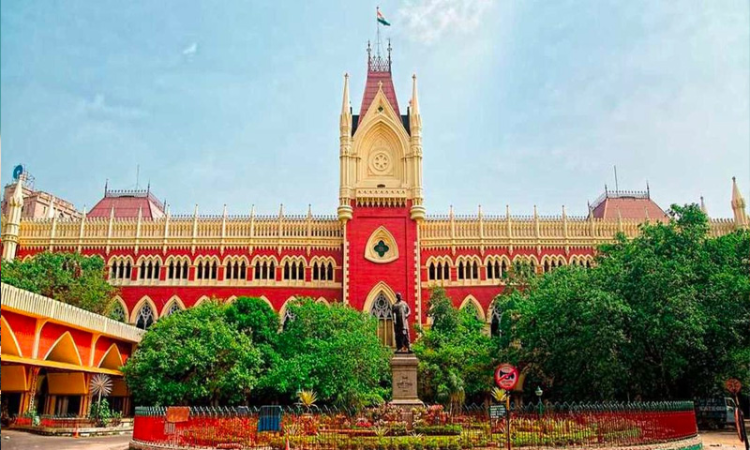
The Calcutta High Court has held that the statutory bar in the Commercial Courts Act operates as an inherent subject-matter bar in arbitration related proceedings and cannot be waived by consent or conduct of the parties, even if no objection is raised before the court of first instance.
Justices Sabyasachi Bhattacharyya and Supratim Bhattacharya made the observation on January 13, while deciding an appeal filed by Siddharta Chandra challenging an order passed by the District Judge, Hooghly, under Section 9 of the Arbitration and Conciliation Act.
The impugned interim order had been passed on August 27, 2025 in a dispute arising out of a partnership agreement relating to a cinema hall property.
“We are of the clear view that the bar of law inbuilt in the Commercial Courts Act, 2015 is an inherent subject-matter bar and as such, hits at the root of the matter, which cannot be waived by the parties. It is well-settled that jurisdiction cannot be conferred by consent. Since the bar is in the nature of a statutory one, the same cannot be waived and as such non-argument on the same before the Section 9 Court is irrelevant altogether to construe as to whether the bar is applicable.” the court observed.
The dispute concerned rights under a partnership agreement, which squarely fell within the definition of a “commercial dispute” under Section 2(1)(c) of the 2015 Act. The court noted that the valuation of the dispute, based on the nature of the partnership interest and immovable property involved, was far above the specified value of Rs. 3 lakhs, making it triable only by a designated commercial court.
The respondent argued that since no objection regarding maintainability or jurisdiction was raised before the Section 9 court, the appellant was precluded from raising it at the appellate stage.
Rejecting this contention, the high court held that a statutory jurisdictional bar cannot be cured by silence, waiver, or acquiescence and non-argument before the designated court was entirely irrelevant.
Setting aside the district judge's order, the court held that the section 9 application itself was not maintainable for want of jurisdiction. It clarified that the appellant was free to approach the appropriate commercial court, which would decide the matter independently and in accordance with law.
Case Title: Siddharta Chandra v. SK. Abdul Kasem & Ors
Case Citation: 2026 LLBiz HC (CAL) 12
Case Number: FMA 1738 of 2025 with CAN 1 of 2025
For Appellant: Advocates Sukumar Bhattacharyya, Oindrilla Chatterjee, Puja Sonkar, Subhangi Bhattacharyya
For Respondent: Advocates Anindya Halder, Sk. Zubair Ahmed, Rasidul Islam Molla