
International Arbitration
Direction Of Disclosure Or Attachment Of Assets Cannot Be Passed Against A Person Who Is Not A Party To The Arbitral Award: Bombay HC
The Bombay High Court has held that a foreign arbitral award cannot be enforced against a person who was not a party to the arbitration proceedings. It ruled that forcing such a person to disclose assets or face coercive enforcement would be without jurisdiction under Part II of the Arbitration and Conciliation Act, 1996.Justice Somasekhar Sundaresan passed the ruling while allowing two interim applications filed by Amstrad Consumer India Pvt. Ltd. (Respondent No. 1) and its shareholder...

Sole Arbitrator's Appointment By One Party Due To Other Party's Inaction After Notice Is Not Unilateral: Telangana High Court
The Telangana High Court bench of Justice Moushumi Bhattacharya has held that an arbitrator appointed by one party in accordance with the agreed terms, after giving due notice, cannot be challenged as a unilateral appointment if the other party was given a full and fair opportunity to nominate its arbitrator but chose not to act. In such a situation, enforcement of a foreign award cannot be refused under Section 48 of the Arbitration and Conciliation Act, 1996. Brief Facts: The...

Arbitrator's Decision To Choose Internationally Recognised Formula Based On Expertise For Computing Damages Can't Be Faulted: Delhi High Court
The Delhi High Court bench of Justice Manoj Kumar Ohri has held that different formulae may be applied depending on the circumstances, and the choice of method for computing damages falls within the arbitrator's discretion. Sections 55 and 73 of the Indian Contract Act, 1872 (Contract Act) do not prescribe any specific formula for the calculation of damages. Therefore, the arbitrator's decision to apply any internationally recognized method, based on their expertise, cannot be faulted. ...
Schedule IV Of Arbitration Act On Fees Of Arbitrator Does Not Mandatorily Apply To International Commercial Arbitrations: Delhi High Court
The Delhi High Court bench of Justice Sachin Datta has observed that in an international commercial arbitration in terms of Section 2(1)(f)(ii) of the Arbitration and Conciliation Act, 1996, the IVth Schedule pertaining to fees of the arbitrator will not apply mandatorily in view of Explanation to Section 11(14) of the Act. Facts The disputes between the parties arose out of the Contract Agreement dated 12.04.2006 for 'four laning of Jhansi-Lakhanadon section KM 297 to KM 351 of ...
International Commercial Arbitration | How To Determine Law Governing Arbitration Agreement? Supreme Court Discusses Tests
In a significant judgment relating to International Commercial Arbitration, the Supreme Court today (March 18) ruled that in the absence of an express law governing the arbitration agreement, the applicable law should be determined based on the parties' intentions, with a strong presumption in favor of the law governing the main contract (lex contractus). The bench comprising Chief Justice Sanjiv Khanna, Justice Sanjay Kumar, and Justice KV Viswanathan heard the case where the plea was made for...
Appointment Of Arbitrator In International Commercial Arbitration By HC Does Not Vitiate Award: Delhi High Court
The Delhi High Court Bench of Justice C. Hari Shankar has held that the appointment of the Arbitrator in an International Commercial Arbitration (“ICA”) by the Chief Justice of the High Court, does not vitiate the impugned award. The bench held that the objection to the appointment of the arbitrator should have been raised during the arbitration proceedings. Since the parties failed to do so, they were deemed to have waived their right to object. Brief Facts of the case: Cross...

Court Cannot Go Into Merits While Enforcing Foreign Award U/S 48 Of Arbitration Act: Bombay High Court
The Bombay High Court bench of Justice Arif S Doctor has held that jurisdiction of enforcement court under section 48 of the Arbitration is very limited and while enforcing the award the court cannot go into the merits of the case. Brief Facts This petition has been filed seeking enforcement of an award under part II of the Arbitration Act. This award was passed by an International Court Arbitration, London by which the petitioner was awarded a sum of Euro 2.45 million and costs. ...
![Section 125 CrPC, Chhattisgarh High Court, daughter, maintain herself, not attained majority, maintenance, Justice Deepak Kumar Tiwari, Birendra Kumar Tiwari vs. Neetu Tiwari [CRR No. 1216 of 2022], Abhilasha vs. Parkash and others (2020) AIR SC 4355,](https://www.livelaw.in/h-upload/images/500x300_chhattisgarh-hc-2.jpg "Section 125 CrPC, Chhattisgarh High Court, daughter, maintain herself, not attained majority, maintenance, Justice Deepak Kumar Tiwari, Birendra Kumar Tiwari vs. Neetu Tiwari [CRR No. 1216 of 2022], Abhilasha vs. Parkash and others (2020) AIR SC 4355,")
Enforcement Of Foreign Award Cannot Be Refused U/S 48 Of Arbitration Act Unless It Is Against Public Policy: Chhattisgarh HC
The Chhattisgarh High Court bench of Justice Deepak Kumar Tiwari has held that enforcement of a foreign award cannot be refused under section 48 of the Arbitration Act unless it is shown that the award is against the public policy of India. The court further observed that even during Covid-19 pandemic, the Banking Sector continued to provide essential services and in the Notification, said Sector is under exception, so the award(s) could not be said to be contrary to public policy of...

Determining 'Seat' In International Arbitration : Supreme Court Takes Shift From 'Closest Connection Test', Says Express Designation Of Place Matters
In a key ruling on International Commercial Arbitration, the Supreme Court held that when an arbitration agreement grants non-exclusive jurisdiction to a foreign court, that court is considered the "seat of arbitration." The Court reaffirmed the BALCO principle that Indian courts lack supervisory jurisdiction under Part I of the Arbitration & Conciliation Act, 1996, for arbitrations seated abroad.Taking a shift from the 'Close Connection Test' to determine the seat of the arbitration, the...

Enforcement Court U/S 48 Of Arbitration Act Can Refuse To Enforce Foreign Award But Cannot Set It Aside: Delhi High Court
The Delhi High Court Bench of Mr. Justice Jasmeet Singh affirmed that the power to set aside a foreign award lies only with the courts at the seat of the arbitration, which exercise primary/supervisory jurisdiction over the matter. Even if grounds under Section 48 of the Arbitration Act can be made out, the Court being the enforcement court and having only secondary jurisdiction over the foreign award cannot set aside the award but may only “refuse” its enforcement.Brief FactsThis is a petition...
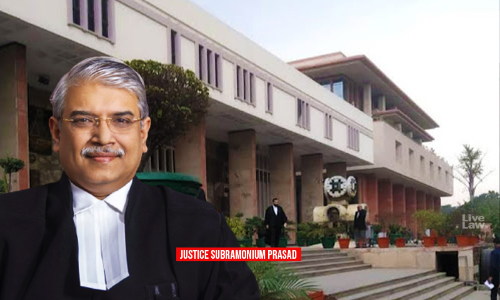
Principle Of Judicial Non-Interference Is Fundamental To Both Domestic & International Arbitral Proceedings: Delhi High Court
The Delhi High Court Bench of Justice Subramonium Prasad observed that it is well settled that the principle of judicial non-interference in arbitral proceedings is fundamental to both domestic as well as international commercial arbitration and that the Arbitration Act is self contained code. In this case, a petition under section 11(5) of the Arbitration and Conciliation Act (Act) was filed seeking appointment of a sole arbitrator. Brief Facts An agreement to sell and purchase...
Court Has Power To Grant Anti-Enforcement Injunction Against Proceedings In Foreign Court Which Threaten Arbitral Process Initiated In India: Delhi High Court
The Delhi High Court bench of Justice C. Hari Shankar has held that when proceedings in a foreign court, or a decree issued by a foreign court, threaten the arbitral process that may be initiated in India, the court has the authority under Section 9 of the Arbitration Act to restrain the party from continuing with the foreign proceedings or enforcing the potentially prejudicial decree. The bench held that: “Though one, as noted, need actually look no further, the power to grant an...