
Parties Must Exhaust Contractual Dispute Resolution Before Court Appoints Arbitrator: MP High Court
Jayanti Pahwa
14 Jan 2026 10:27 AM IST
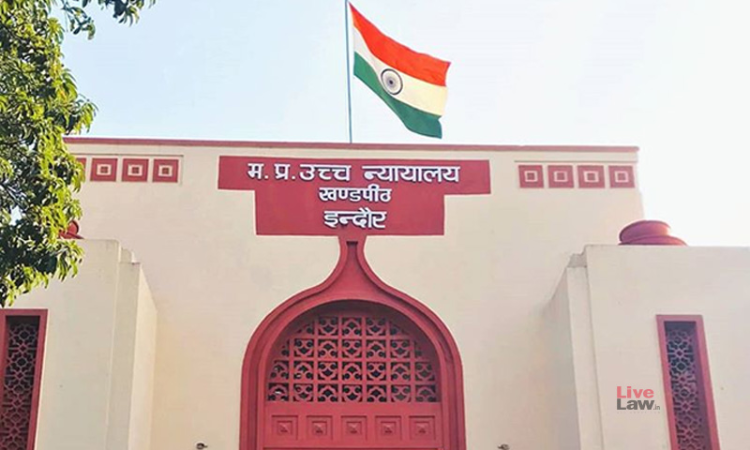
The Madhya Pradesh High Court has held that a court cannot appoint an arbitrator under Section 11 of the Arbitration and Conciliation Act, 1996 unless the party seeking such appointment has first exhausted the dispute resolution mechanism contractually agreed upon between the parties.
A Bench of Justice Pavan Kumar Dwivedi dismissed three applications filed by former employees of Taskis India Private Limited, seeking appointment of an arbitrator, holding that the applicants were bound by the arbitration procedure stipulated in their employment agreements.
The Court observed, “Applicants have to first exhaust the procedure as agreed upon in terms of Clause 13 of the Employment Agreement and only after that, if occasion so arise, they can approach the competent Court for redressal of their grievance.”
The applications were filed by Anshul Chawla, Bhagat Singh Bhati, and Bhavana Yadav, all former employees of Taskis India Private Limited, whose services were terminated between February and March 2025. Each of the applicants had entered into employment agreements containing Clause 13, which provided for resolution of disputes through arbitration.
The agreement stipulated that arbitration would be conducted in accordance with the Rules of the Mumbai Centre for International Arbitration (MCIA) and fixed the seat and venue of arbitration at Indore.
Following termination of their services, the former employees invoked the arbitration clause by issuing notices. However, instead of initiating arbitration under the MCIA Rules, they approached the High Court seeking appointment of an arbitrator under Section 11 of the Act.
The applicants contended that the arbitration clause was unworkable, as it created an anomaly by prescribing MCIA rules while fixing the seat of arbitration at Indore. On this basis, it was argued that arbitration could not be effectively invoked and that court intervention under Section 11 was warranted. They further alleged arbitrary termination without due process and, in the case of one applicant, claimed reputational harm due to alleged actions of the employer.
The company opposed the applications, submitting that the arbitration clause was valid and binding and that the applicants were required to initiate arbitration strictly in accordance with the MCIA Rules. It was argued that the MCIA Rules do not restrict arbitration proceedings to Mumbai and permit parties to agree upon any seat or venue.
The High Court examined Clause 13 of the employment agreements and held that the parties had clearly distinguished between the procedural rules governing arbitration and the seat or venue of arbitration. It rejected the contention that MCIA Rules could not apply where the seat was fixed at Indore, noting that Rule 30 of the MCIA Rules expressly permits parties to mutually agree on the seat of arbitration.
The Court further noted that the applicants had already invoked the arbitration clause and that the respondent had accepted such invocation, reiterating that the arbitrator must be appointed in accordance with the MCIA Rules. There was, therefore, no refusal or failure on the part of the respondent to comply with the arbitration agreement.
Referring to the comprehensive procedure laid down under the MCIA Rules for appointment, challenge, and replacement of arbitrators, the Court held that the applicants could not bypass the agreed mechanism and directly seek appointment of an arbitrator from the Court:
“The applicants, with open eyes, have agreed to follow the Rules of MCIA for appointment of Arbitrator in terms of Clause 13.1.1 of the employment agreement. Thus, they cannot now turn back and seek appointment of Arbitrator in terms of Section 11 of the Act of 1996 without first exhausting the process provided under the arbitration agreement.”
Holding that the applicants had failed to exhaust the agreed arbitral procedure, the High Court dismissed the applications, while granting liberty to the applicants to approach the Mumbai Centre for International Arbitration for appointment of a sole arbitrator in accordance with the arbitration agreement.
Case Title: Anshul Chawla v Taskis India Pvt. Ltd.
Citation: 2026 LLBiz HC (MP) 5
Case Number: AC-105-2025
For Applicant: Advocate Rohit Sharma
For Respondents: Advocates Nishant Nigam and Shravan Kumar Lahoti