
High Court
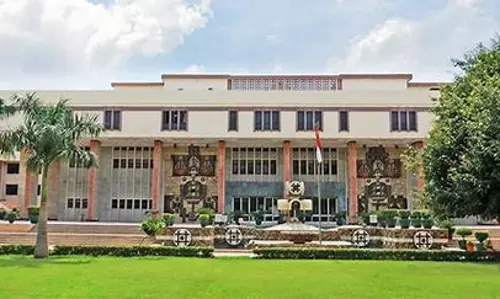
Award Passed After Expiry Of Arbitrator's Mandate Is Non-Est, Court Can't Extend Mandate Post-Award: Delhi High Court
The Delhi High Court held that an award passed after expiry of the arbitrator's mandate is non-est and unforceable holding that the court has no power to extend the mandate post award if no application seeking extension of the mandate was pending before the award was passed. A Division bench of Justice V. Kameswar Rao and Justice Vinod Kumar held that the award becomes operational...
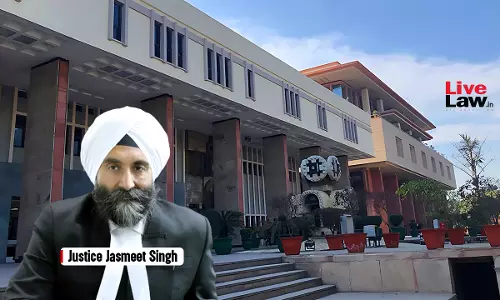
Order Terminating Arbitration For Non-Filing Of Statement Of Claim Is Not 'Award', Cannot Be Challenged U/S 34 A&C Act: Delhi High Court
The Delhi High Court held that an order terminating arbitral proceedings under section 25 of the Arbitration and Conciliation Act, 1996 (Arbitration Act) on account of non-filing of statement of claim does not amount to an arbitral award and therefore cannot be challenged under section 34. Justice Jasmeet Singh held that “the Award can only be considered to be an award once...

CGST Rules | GST Registration Can Be Restored After Expiry Of Revocation Period If Rule 22(4) Conditions Are Fulfilled: Gauhati High Court
The Gauhati High Court has held that GST Registration can be restored even after expiry of the revocation period if the assessee complies with Rule 22(4) CGST (Central Goods and Services Tax Rules), 2017 requirements. The Single Bench, consisting of Justice Sanjay Kumar Medhi, opined that if the assessee submits such an application and complies with all the requirements as provided...
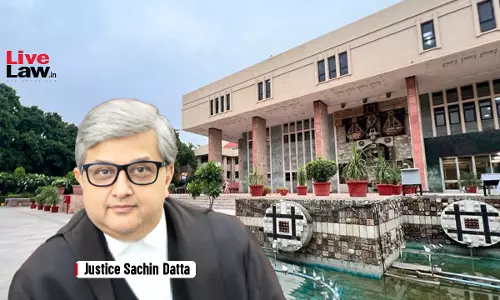
Renting/Leasing Residential Premises For Use As Residence Exempt From GST: Delhi High Court
The Delhi High Court has held that GST cannot be levied on renting/ leasing of residential premises for use as residence.Justice Sachin Datta clarified thus while dealing with a plea to quash an order passed by the Collector of Stamps directing the petitioner to pay allegedly deficient stamp duty on a lease deed executed with a private company, in respect of a residential property in...

S.263 Income Tax Act Can Be Invoked When AO Fails To Address Core Issue In Assessment Order: Kerala High Court
The Kerala High Court held that Section 263 of the Income Tax Act, 1961, can be invoked where the Assessing Officer (AO) fails to address a core issue in the assessment order. The bench opined that the main issue does not appear to have been addressed by the assessing authority while issuing an order under Section 143(3) of the Act. Since the assessment order does not appear to...
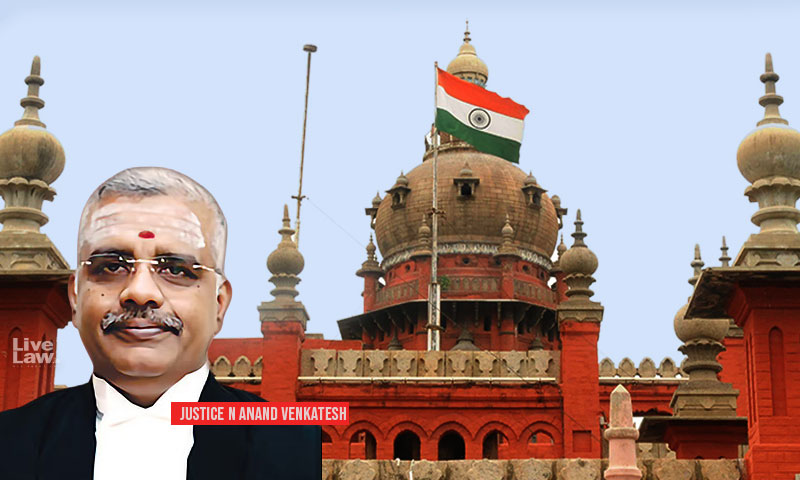
Principles Of Natural Justice Are Non-Negotiable In Arbitral Proceedings Even If Tribunal Is Comprised Of Lay Persons: Madras High Court
The Madras High Court, while setting aside an arbitral award, has observed that despite the arbitral Tribunal comprising elder family members, who are lay persons and not well-trained legal minds, the principles of natural justice have to be followed. If an award is passed without giving an opportunity to either of the sides to present their case, the same would violate...

Income Tax Commissioner's Order For Reopening Assessment U/S 151 Income Tax Act Can Be In Words "Yes, I Am Convinced": Delhi High Court
The Delhi High Court has held that the Income Tax Commissioner's order granting sanction under Section 151 of the Income Tax Act 1961 for reopening assessment after four years of the relevant Assessment Year (AY) can be in the words— “Yes, I am convinced”.Section 151(1) of the Act categorically provides that no notice for reassessment shall be issued under Section 148 by the...
Customs Authorities Lack Jurisdiction To Issue Directions Under GST Law: Madras High Court
The Madras High Court recently held that Customs authorities have no jurisdiction to issue directions under the Goods and Services Tax (GST) law. The Court struck down a February 2021 public notice issued by the Chennai Customs that sought to regulate the GST treatment on auctioned cargo.A single bench of Justice N Anand Venkatesh ruled that such powers lie exclusively with authorities...

Bombay High Court Sets Aside ₹75 Lakh Compensation Awarded Against Hersheys India In Jumpin Drink Manufacturing Dispute
The Bombay High Court has recently set aside a Rs 75 lakh compensation awarded to Kanti Beverages Pvt. Ltd. against Hersheys India Pvt. Ltd. in a dispute over the contract to manufacture and package the fruit drink brand Jumpin. The court said the compensation was “picked virtually out of the hat” and had no basis.A single bench of Justice Somasekhar Sundaresan, in an order made available...
Deliberate Non-Participation In Arbitral Proceedings Not Grounds To Resist Enforcement Of Award: Madras High Court
The Madras High Court bench of Justice N Anand Venkatesh has observed that when a party purposely fails to avail an opportunity duly accorded by the Arbitral Tribunal to present its case, it cannot later use its own default as a ground to resist enforcement of the resultant award. Facts The Petitioner, M/s Vittera BV (“Vittera”) filed the present petition seeking enforcement...
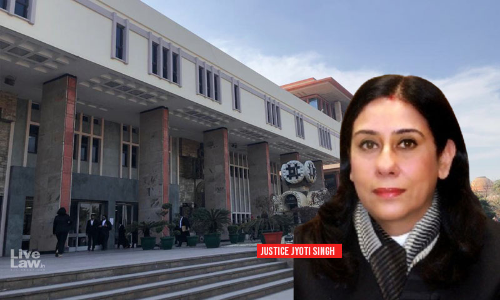
Arbitrators Cannot Be Disqualified For Merely Participating In Prior Arbitration Involving Interpretation Of Similar Clause: Delhi High Court
The Delhi High Court dismissed a petition under section 34 of the Arbitration and Conciliation Act, 1996 (Act) filed by Steel Authority of India Limited (SAIL) against an arbitral award passed in favor of British Marine PLC.(Respondent). SAIL entered into Contract of Affreightment (COA) with the respondent for transportation of 3 million metric tonnes (±5%) of coking coal over five...
S.36(1)(vii) Income Tax Act | Closing Individual Debtor Accounts Not Mandatory For Bad Debt Deduction: Kerala High Court
The Kerala High Court stated that closing individual debtor accounts is not mandatory for bad debt deduction under Section 36(1)(vii) of the Income Tax Act, 1961. Section 36(1)(vii) of the Income Tax Act, 1961, deals with the deduction of bad debts. It allows the taxpayer to claim a deduction for bad debts that have been written off in the books of accounts during the previous...