
Bombay High Court
Denial Of Re-Testing Of Seized Goods Must Be Occasional And Recorded In Writing: Bombay High Court
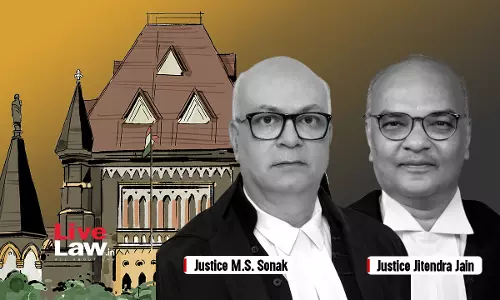
The Bombay High Court has held that re-testing of seized goods is a trade facilitation measure, not to be denied in the ordinary course. Justices M.S. Sonak and Advait M. Sethna stated that "...Ultimately, such denial must be only occasional and that too, on reasonable grounds to be recorded in writing. The guidelines emphasised that this facility of re-testing is nothing but a...
Individual Flat Owners Forming Cooperative Society Are Bound By Arbitration Clause Contained In Sale Agreement: Bombay High Court
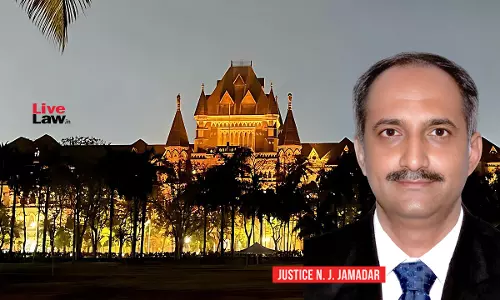
The Bombay High Court bench of Justice N.J. Jamadar has observed that when individual flat owners form a cooperative society to enforce rights created in favour of the individual members under the Agreements for Sale, the society cannot claim that it is not bound by the arbitration clause contained in those Agreements. The argument that it is not a signatory to the Agreements for...
Pending Proceedings Under Omitted CGST Rules 89(4B) & 96(10) Lapse In Absence Of Savings Clause: Bombay High Court
The Bombay High Court has held that all pending proceedings under the omitted CGST Rules 89(4B) & 96(10) lapse in the absence of a savings clause. The bench agreed with the assessee/petitioners that the provisions of Section 6 of the General Clauses Act are not attracted and therefore the pending proceedings can claim no immunity or protection. Unless the Respondents...
Income Tax Act | Payment To Consulting Doctors Appointed On Probation Is Not Salary; TDS Deductible U/S 194J, Not U/S 192: Bombay High Court
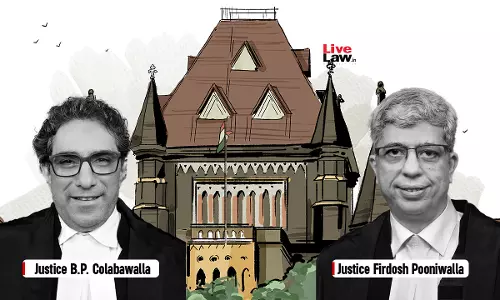
The Bombay High Court has held that payments to consultant doctors are not salary. Hence, TDS is deductible under section 194J and not under section 192 of the Income Tax Act. Justices B.P. Colabawalla and Firdosh P. Pooniwalla stated that there does not exist an employer-employee relationship between the assessee and consultant doctors, and the payments made to them by the...

Income Tax Act | Draft Assessment Order Not Permissible U/S 144C(1) When TPO Makes No Variation: Bombay High Court
The Bombay High Court has held that a draft assessment order is not permissible under section 144C(1) of the Income Tax Act when the TPO (transfer pricing officer) makes no variation. Section 144C(1) of the Income Tax Act, 1961, provides that the Assessing Officer should forward a draft of the proposed assessment order to the eligible assessee if any variation of the income or...
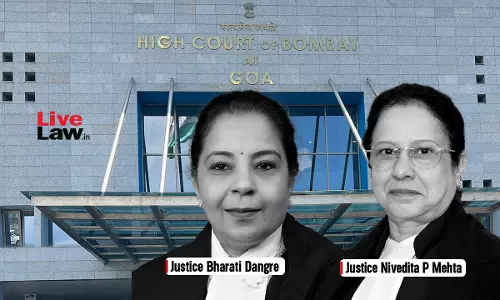
S. 149 Income Tax Act | Reassessment Beyond Limitation Period Is Valid Where 'Bogus' Royalty Payments Exceed ₹50 Lakh: Bombay High Court
The Bombay High Court has stated that reassessment beyond 3 years is valid where bogus royalty expenses exceed Rs. 50 lakhs. Justices Bharati Dangre and Nivedita P. Mehta upheld the reassessment proceedings initiated beyond three years, in the present case, where the alleged bogus royalty expenses exceeded 50 Lakhs. The bench opined that Section 149(1)(b) of the Income Tax Act is...
Tax Liability Under JDA Arises Only Upon Conveyance Of Property, Not On Execution Of Agreement: Bombay High Court
The Bombay High Court held that tax liability under JDA (joint development agreement) arises only upon conveyance of property, not on execution of agreement. The bench consists of Justices Bharati Dangre and Nivedita P. Mehta stated that no liability actually fell upon the assessee at the time when JDA was entered into, as the liability arises only upon the conveyance of...
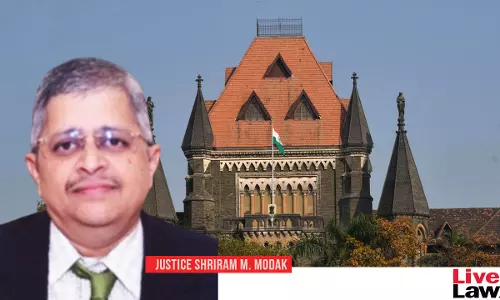
Right To Travel Abroad Can't Be Curtailed Solely On Grounds Of Pending Tax Prosecution: Bombay High Court
The Bombay High Court has stated that facing tax prosecution does not automatically bar an accused from foreign travel. Justice S.M. Modak stated that, "It is true right to travel abroad is recognized as a fundamental right. Merely because a person is facing with prosecution, it does not mean that he cannot travel abroad till the time the investigation is under progress or criminal...
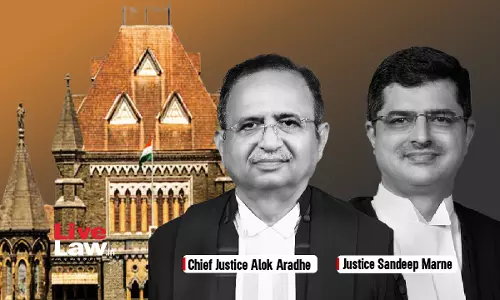
AO Can Determine Annual Value Of Property Higher Than Municipal Rateable Value U/S 22 Income Tax Act: Bombay High Court
The Bombay High Court stated that the assessing officer (AO) can determine the annual value of the property higher than the municipal rateable value under Section 22 of the Income Tax Act. Section 22 of the Income Tax Act, 1961 deals with the "taxability of 'Income from House Property”. It says the annual value of property consisting of any buildings or lands appurtenant thereto...
Income Tax | Interest On Fixed Deposits, TDS Refund Linked To Business Qualifies For S. 80IA Deduction: Bombay High Court
The Bombay High Court held that interest on fixed deposits, TDS refund linked to business qualifies for deduction under Section 80IA of the Income Tax Act. Section 80IA of the Income Tax Act, 1961 provides tax incentives for businesses operating in certain sectors such as infrastructure, power, and telecommunications. Justices B.P. Colabawalla and Firdosh P. Pooniwalla...
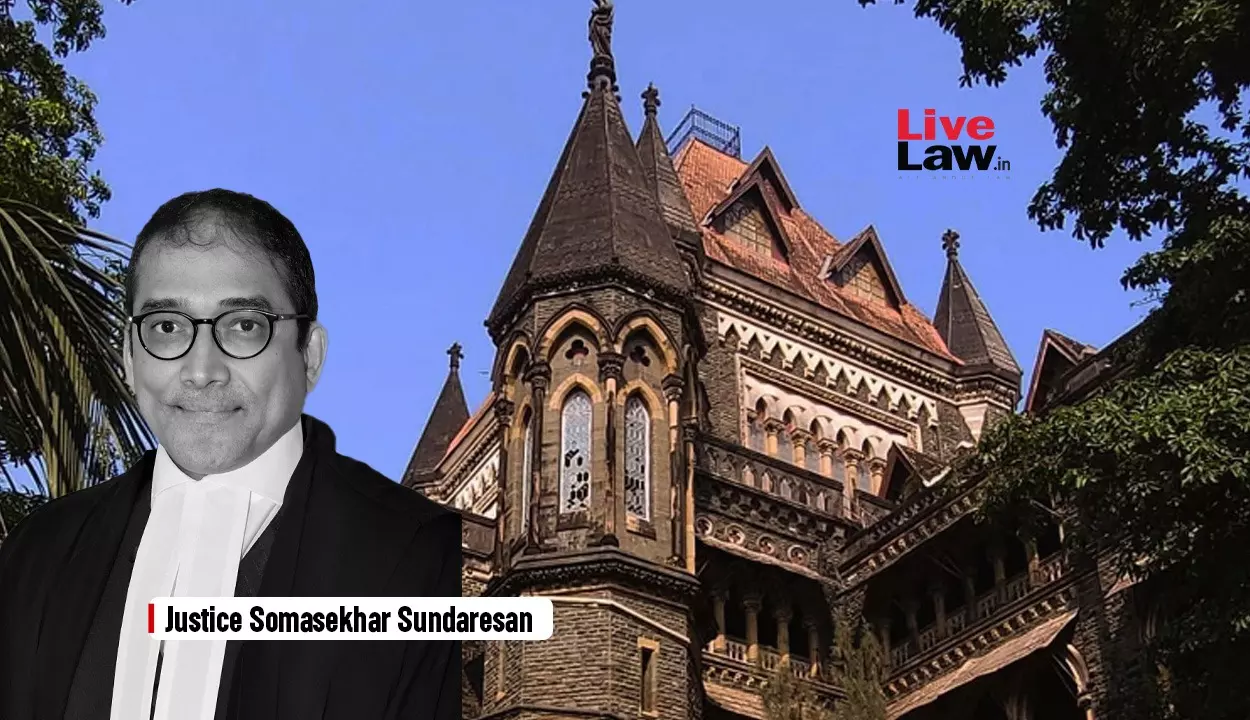
Three-Month Deadline For Passing Arbitral Award Under NSE Byelaws Is Directory And Not Mandatory: Bombay High Court
The Bombay High Court Bench of Justice Somasekhar Sundaresan while deciding a petition under Section 34, Arbitration and Conciliation Act, 1996 (“ACA”) had an occasion to interpret Rule 13, National Stock Exchange (“NSE”) Byelaws. The Court held that Rule 13(b) which provided that arbitral award under the Rules must be rendered within three months from the date of entering...
[GST] Reverse Charge Mechanism Notifications Denying ITC To Service Providers Are Constitutionally Valid: Bombay High Court
The Bombay High Court held that RCM notifications denying ITC credit to service providers are constitutionally valid and does not violate Article 14 and 19(1)(g) of the Constitution. The bench opined that in case of RCM, the person receiving the services, i.e. the recipient pays the tax and can claim credit of the same. The provider of service is exempt from paying tax. Merely...