
Madhya Pradesh High Court

Executing Court to Determine Stamping on Arbitral Award Meets Requirements Under Indian Stamp Act: Madhya Pradesh High Court
The Madhya Pradesh High Court bench of Justice Duppala Venkata Ramana held that the executing court cannot dismiss the objections regarding the adequacy of the arbitral award without determining whether the award meets the stamping requirements outlined in the Indian Stamp Act. Brief Facts: The matter pertained to a dispute initiated by the Respondent-Bank against the Petitioner for the recovery of a loan amount that the Petitioner borrowed and subsequently defaulted on....
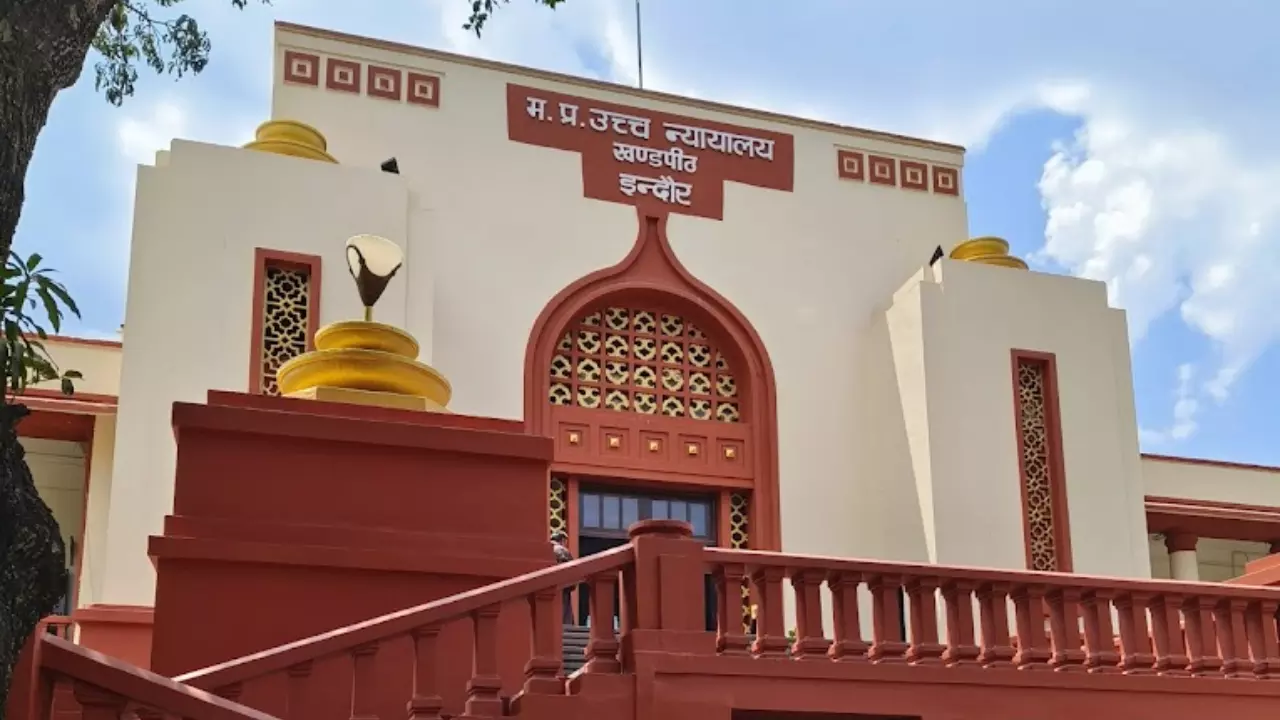
When State Constitutes Proper Dispute Redressal System, Party Cannot Directly Approach High Court Under Writ Petition: Madhya Pradesh High Court
The Madhya Pradesh High Court single bench of Justice Gajendra Singh held that when the government constitutes a proper dispute redressal system for resolution of any dispute between the parties, the party cannot directly approach the High Court and file a writ petition. It held that when the statute provides for statutory appeal, the said remedy is to be availed by the litigating parties (referred to Hindustan Coca Cola Beverage Private Ltd vs. Union of India and others reported in...
S. 9 Petition for Interim Relief in International Commercial Arbitration Not Classified as 'Arbitration Case', Must Be Filed as 'Miscellaneous Civil Case': Madhya Pradesh High Court
The Madhya Pradesh High Court division bench of Justice Sushrut Arvind Dharmadhikari and Justice Devnarayan Mishra dismissed a petition seeking interim relief under Section 9 of the Arbitration and Conciliation Act, stating it should have been filed as a 'Miscellaneous Civil Case' rather than an 'Arbitration Case' based on Chapter 2 of the Arbitration and Conciliation (Conduct of Arbitral Proceedings) Rules, 2008. Brief Facts: Ilwonhibrand Co. Ltd. (“Petitioner”) entered into a sale...

Arbitration Under Madhya Pradesh Madhyastham Adhikaran Adhiniyam, 1983 Cannot Be Invoked Without Availing Pre-Arbitral Remedy Within Limitation: Madhya Pradesh High Court
The High Court of Madhya Pradesh, at Jabalpur, has held that the Arbitration under Section 7 of the Madhya Pradesh Madhyastham Adhikaran Adhiniyam, 1983 cannot be invoked without first invoking the pre-arbitral in-house remedy provided under the agreement within the period of 30 days given under the Agreement. The bench of Justices Sheel Nagu and Vinay Saraf held that the pre-arbitral in-house remedy must be invoked within the 30 days from the termination of the works order as provided...

Writ Not Maintainable When Efficacious Remedy Before The Arbitrator Is Available: Madhya Pradesh High Court
The High Court of Madhya Pradesh, Jabalpur bench has held that a writ would not be entertained when the petitioners fail to avail the efficacious contractual remedy before the Arbitrator. The bench of Justice Gurpal Singh Ahluwalia held that merely because the nominated arbitrator is the managing director of the respondent corporation, it cannot be assumed that it would not be able to fairly discharge its functions as an arbitrator. Facts The petitioners (Rice Millers) entered...
Writ Petition Cannot Be Entertained To Challenge An Arbitral Award, Statutory Remedy Under Section 34 Of The A&C Act Must Be Availed: Madhya Pradesh High Court
The High Court of Madhya Pradesh has held that a writ petition filed to challenge an arbitral award is not maintainable in view of the efficacious alternative statutory remedy available under Section 34 of the A&C Act. The bench of Justices Sushrut Arvind Dharmadhikari and Gajendra Singh held that a writ petition should be dismissed in limine when there is a statutory appeal available. It held that statutory remedies available under Sections 34 and 37 of the A&C Act cannot be...
Proceedings Under Section 138 of Negotiable Instruments Act And Arbitration Are Parallel In Nature Rather Overlapping: Madhya Pradesh High Court
The Madhya Pradesh High Court single bench of Justice Anand Phatak held that proceedings under Section 138 of the Negotiable Instruments Act regarding dishonoring of cheques and arbitration are two proceedings moving in different jurisdictional realm and they are parallel in nature rather than overlapping. It held that “both may continue because scope of Section 138 of the N.I. Act is confined to the dishonoured cheques, whereas dispute between the parties appears to be such deep and exact...
Prima Facie Proof Needed To Interpret S. 8 Invocation, M.P High Court Applies Prima Facie Approach, Dismisses Revision Based On Lack Of Proof
The High Court of Madhya Pradesh bench comprising Justice Achal Kumar Paliwal dismissed a revision petition seeking to invoke Section 8 of the Arbitration and Conciliation Act, 1996 based on a dispute related to the transfer of cheques under a partnership deed. The arbitration clause in the deed was about disputes arising between the parties, touching the firm's business or interpretation of any subsequent provisions relating to the firm and its business. The High Court noted there was no...
Writ Petition Against Arbitrator's Order Not Maintainable Unless Exceptional Circumstances Or Bad Faith Can Be Shown: M.P. High Court
The High Court of Madhya Pradesh bench comprising Justice Sushrut Arvind Dharmadhikari and Justice Devnarayan Mishra refused to exercise the writ jurisdiction of the High Court under Article 226/227 of the Indian Constitution for a matter involving dismissal of an application made to an Arbitrator under Section 16(3) of the Arbitration and Conciliation Act, 1996 by the Petitioner. The High Court held that a writ petition under Article 226/227 of the Indian Constitution is not maintainable...

Commercial Courts Act | Can't Permit Written Statement After 120 Days, Summer Vacations Not 'Extraordinary Circumstance': MP High Court
In a commercial suit, Madhya Pradesh High Court has underscored that a written statement filed after the lapse of 120 days since the service of summons cannot be taken on record.The Division Bench of Justices Sujoy Paul and Vivek Jain also refused to consider routine summer vacations as an 'extraordinary circumstance' mentioned in Prakash Corporates v. Dee Vee Projects Limited, 2022 LiveLaw (SC) 162 that warrants a relaxation of the rigid 120 days' duration. In Prakash Corporates, the apex court...

Order Of Arbitrator Rejecting Application U/S 16 Of The A&C Act Cannot Be Challenged In A Writ Petition: Madhya Pradesh High Court
The High Court of Madhya Pradesh held that an order of the arbitral tribunal rejecting a challenge to its jurisdiction under Section 16 of the A&C Act is not challengeable in a writ petition. The bench of Justice Sushrut Arvind Dharmadhikari held that a party aggrieved by the rejection of its application under Section 16 of the AC& Act has to wait till the passing of the final award and then challenge the award under Section 34 of the Act including the ground of lack of...
Writ Petitioner Concealing CESTAT’s Order Of Confiscation: Madhya Pradesh High Court Imposes Rs. 25K Cost
The Madhya Pradesh High Court has imposed a cost of Rs. 25000 on the writ petitioner seeking provisional release of goods for suppressing the fact of CESTAT’s final order of confiscation, which was well within his knowledge.The bench of Justice Vivek Rusia and Justice Pranay Verma has observed that the Tribunal has set aside the order rejecting the application for provisional release of the currency. The order of the tribunal has attained finality in respect of provisional release, but before...