
Supreme Court
IBC | Statutory Set Off Or Insolvency Set Off Inapplicable To Corporate Insolvency Resolution Process: Supreme Court
The Supreme Court has held statutory set off or insolvency set off is not applicable to Corporate Insolvency Resolution Process (“CIRP”) proceedings under the Insolvency and Bankruptcy Code, 2016 (“IBC”). Further, Regulation 29 of the Insolvency and Bankruptcy Board of India (Liquidation Process) Regulations, 2016 (“Liquidation Regulations”), which provides for mutual dealing and set off, does not apply to Part II of the IBC which deals with CIRP.The principle of Set-off recognizes the right of...
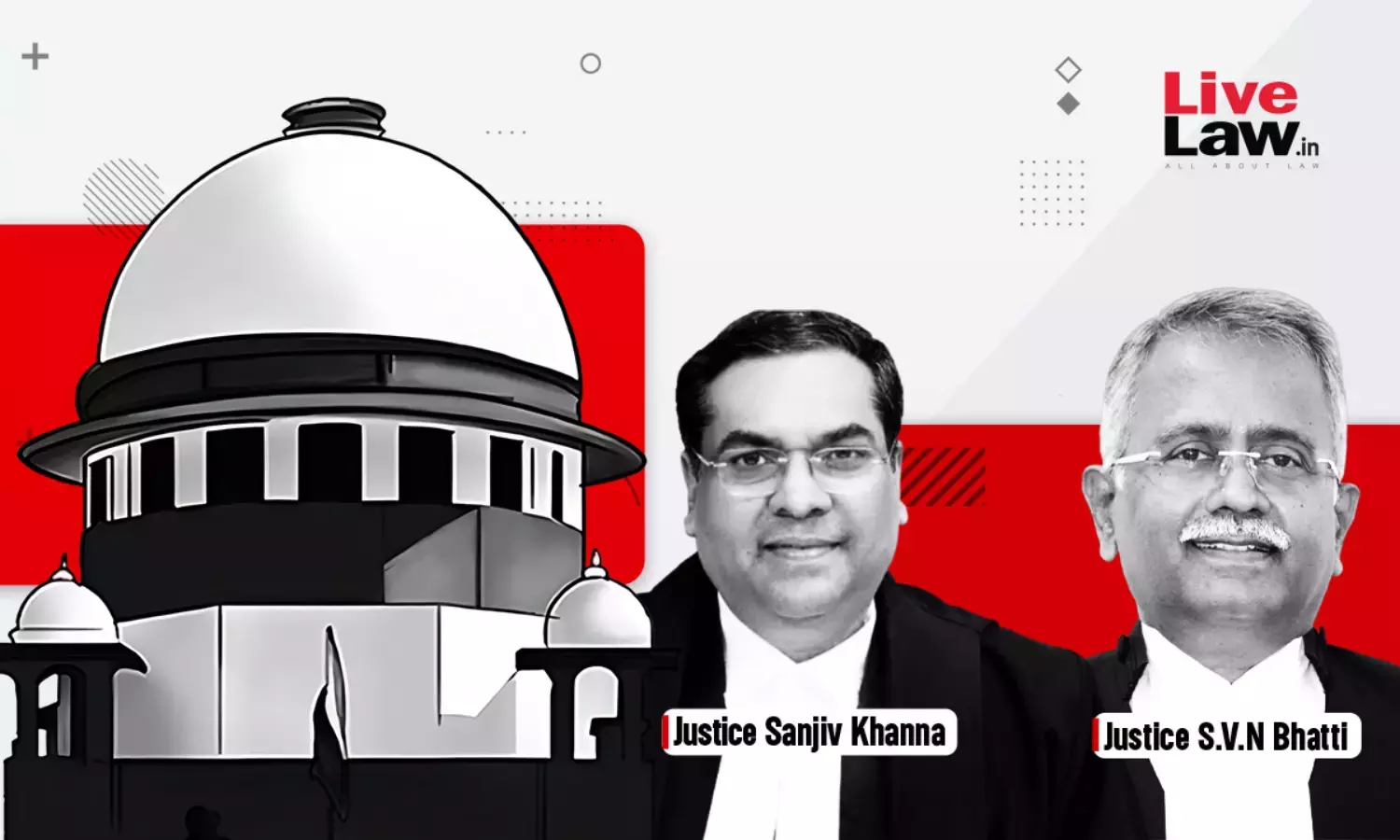
IBC - Is Dissenting Financial Creditor Entitled To Minimum Value Of Security Interest? Supreme Court Refers To Larger Bench, Doubts Precedent
The Supreme Court has referred to larger bench the issue whether a dissenting financial creditor is to be paid the minimum value of its security interest as per the Insolvency and the Bankruptcy Code 2016.A bench comprising Justices Sanjiv Khanna and SVN Bhatti, in the case DBS Bank Ltd Singapore v. Ruchi Soya Industries Ltd and another, referred the following question : Whether Section 30(2)(b)(ii) of the Insolvency and Bankruptcy Code, 20161, as amended in 2019, entitles the...
IBC- Properties Sold In Auction Sale Before Declaration Of Moratorium Can't Be Treated As Liquidation Asset : Supreme Court
Recently, the Supreme Court (on December 06) observed that the properties of a defaulting borrower sold in an auction sale could not be treated as liquidation assets if the sale was concluded before the declaration of a moratorium under the Insolvency and Bankruptcy Code 2016.While doing so, the Bench of Justices Aniruddha Bose and Vikram Nath set aside the order passed by the National Company Appellate Tribunal, Delhi (NCLAT).The facts of the present case revolve around the insolvency of Amrit...
IBC | When Matter Heard But No Order Pronounced On The Same Day, Limitation To Commence From The Date When Order Gets Uploaded: Supreme Court
The Supreme Court has held that when the National Company Law Tribunal (“NCLT”) hears a matter on a particular date but does not pronounce the order on the same date, then the limitation for filing an appeal from such order before the National Company Law Appellate Tribunal (“NCLAT”) under Section 61 of the Insolvency and Bankruptcy Code, 2016 (“IBC”), would commence from the date when the Order of NCLT gets uploaded.However, in cases where matter was heard and order was pronounced on the same...
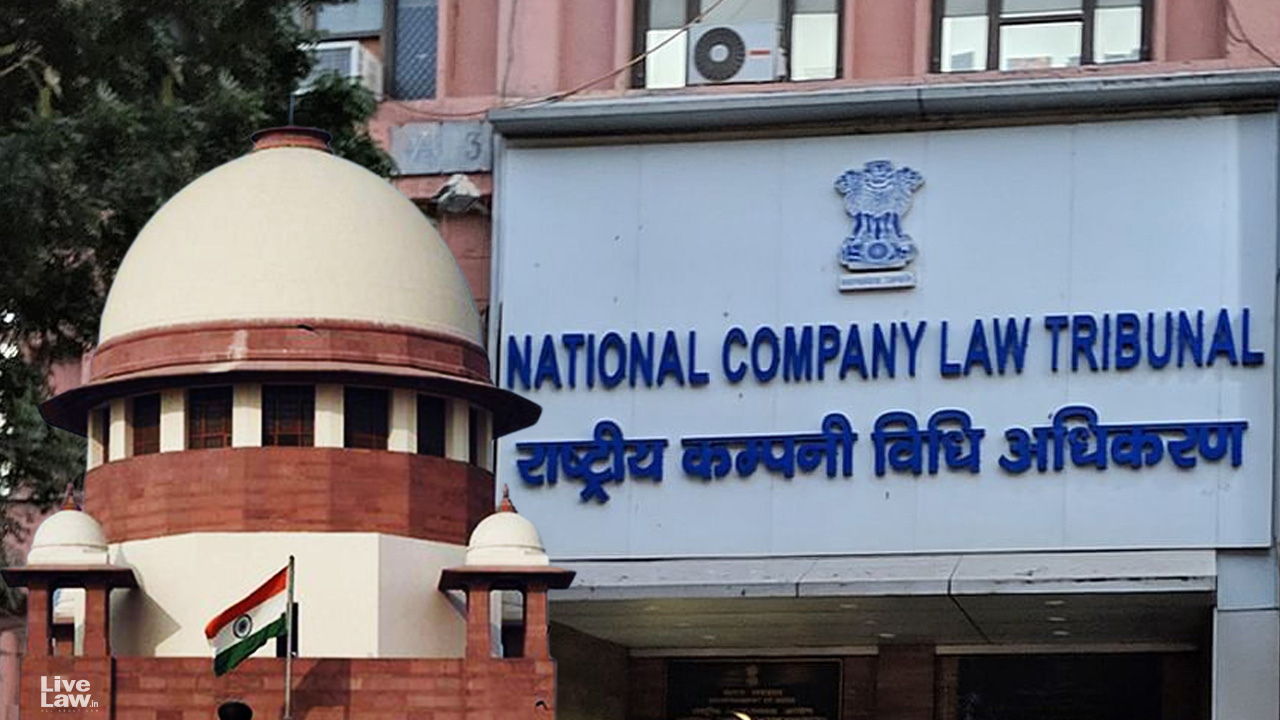
IBC | When Matter Heard On A Particular Date But Order Pronounced Later, NCLT Not To Affix Date Of Hearing On Order: Supreme Court
The Supreme Court has held that when a matter is heard by the National Company Law Tribunal (“NCLT”) on a particular date but the order is pronounced on another date, then NCLT must refrain from affixing the date of hearing on the order. The requirement of pronouncement of order cannot be dispensed with, since under the NCLT Rules, 2016 there is a distinction between 'hearing' and 'pronouncement'.The NCLT heard a matter on 17.05.2023 but no order was pronounced. The order was uploaded on...
Sec 240A IBC | Even If MSME Registration Obtained Post Commencement Of CIRP, Promoter Eligible To Submit Resolution Plan: Supreme Court
The Supreme Court has held that the Promoter of a Corporate Debtor is eligible to submit a resolution plan in terms of Section 240A of the Insolvency and Bankruptcy Code, 2016 (“IBC”), even if the Corporate Debtor was registered as Micro Small Medium Enterprise (“MSME”) after commencement of Corporate Insolvency Resolution Process (“CIRP”).The Bench comprising Justice Sanjay Kishan Kaul and Justice Sudhanshu Dhulia, has set aside an order passed by the National Company Law Appellate Tribunal...
IBC | Cut-Off Date To Determine Resolution Applicant's Eligibility Under S.240A Is Date Of Submitting Resolution Plan : Supreme Court
The Supreme Court has held that for the purpose of Section 240A of Insolvency and Bankruptcy Code, 2016 (“IBC”), the cut-off date to determine the eligibility of a resolution applicant to submit a resolution plan, is the date on which the resolution plan was submitted and not the date on which Corporate Insolvency Resolution Process (“CIRP”) commenced.The Bench comprising Justice Sanjay Kishan Kaul and Justice Sudhanshu Dhulia, has set aside an order passed by the National Company Law Appellate...
IBC | For Rejection Of A Resolution Plan Under Section 31(2), NCLT Must Pass A Reasoned Order: Supreme Court
The Supreme Court has held that when the National Company Law Tribunal (“NCLT”) exercises its power under Section 31(2) of the Insolvency and Bankruptcy Code, 2016 to not approve a resolution plan, then a reasoned order must be passed. It was emphasized that recording of cogent reasons while passing an order is the duty of Courts and Tribunals.The Supreme Court has set aside an order whereby the NCLT kept the approval of a resolution plan in abeyance while directing an Official Liquidator to...
IBC | No Casual Interference With Commercial Wisdom Of CoC : Supreme Court Sets Aside NCLT Direction To Reevaluate Corporate Debtor's Assets
The Supreme Court has set aside an order whereby the National Company Law Tribunal (“NCLT”) kept the approval of a resolution plan in abeyance while directing an Official Liquidator to conduct re-valuation of the Corporate Debtor’s assets. Consequently, the order of National Company Law Appellate Tribunal (“NCLAT”) affirming the NCLT’s order has also been set aside.An application under Section 30(6) of the Insolvency and Bankruptcy Code, 2016 (“IBC”) was filed by the Resolution Professional...
Supreme Court Upholds Constitutionality Of IBC Provisions Relating To Personal Guarantors; Says Adjudicatory Role Can't Be Read Into Sec 97
In a significant judgment, the Supreme Court on Thursday (November 9) upheld the constitutionality of the provisions of the Insolvency and Bankruptcy Code (IBC) relating to Personal Guarantors' Insolvency Resolution, which were introduced through the amendments made in 2019.The Court held that these provisions (Section 95 to 100 IBC) cannot be held as unconstitutional for not affording an opportunity of hearing to the personal guarantors before the insolvency petition filed by creditors is...
IBC | Tax & Customs Dues To Be Paid As Per Waterfall Mechanism Under Section 53 : Supreme Court
The Supreme Court Bench comprising Justice Sanjiv Khanna and Justice S.V.N. Bhatti, has clarified that the dues of the Central Board of Indirect Taxes & Customs, Department of Revenue, will be paid as per the waterfall mechanism given under Section 53 of the Insolvency and Bankruptcy Code, 2016 (“IBC”).Section 53 of IBC provides the order of priority in which proceeds from sale of liquidation assets is to be distributed amongst Corporate Debtor’s creditors, stakeholders etc. The insolvency...