
High Courts
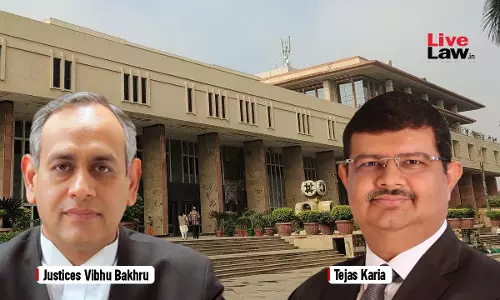
Indo-Swiss DTAA | Period Of Reference Can't Be Excluded From Limitation U/S 153B Income Tax Act If Reference Is Invalid: Delhi High Court
The Delhi High Court has made it clear that Clause (ix) of the Explanation to Section 153B of the Income Tax Act 1961 cannot be invoked to exclude the period of reference under the Indo-Swiss DTAA, if the reference itself is invalid.A division bench of Justices Vibhu Bakhru and Tejas Karia observed,“On a plain reading of Clause (ix) of the Explanation to Section 153B of the Act, the...
Income Tax Act Doesn't Contemplate Hiatus Between Handing Over & Receipt Of Documents By AO Of Non-Searched Entity: Delhi High Court
The Delhi High Court made it clear that Section 153C of the Income Tax Act, 1961 “does not contemplate a hiatus” between handing over and receipt of information or documents pertaining to a non-searched entity.For context, Section 153C allows the Revenue department to proceed against a party other than the person who is being searched, if incriminating articles belonging to the other...
Income Tax Act | Bona Fide Belief With Genuineness Of Transaction Constitutes Reasonable Cause U/S 273B; No Penalty Imposable U/S 271E: Chhattisgarh HC
The Chhattisgarh High Court held that bona fide belief coupled with genuineness of transactions constitutes a reasonable cause under section 273B of the Income Tax Act for not invoking Section 271E of the Act. The Division Bench of Justices Sanjay K. Agrawal and Deepak Kumar Tiwari referring to Section 273B of the Income Tax Act stated that the word 'reasonable cause' has not...

Charges Paid For Bandwidth To Overseas Telecom Operators Not Royalty U/S 9(1)(vi) Of Income Tax Act: Delhi HC Rejects Plea Against Airtel
The Delhi High Court has dismissed an appeal preferred by the Income Tax Department claiming that Bharti Airtel should have deducted TDS on payments made to overseas telecom service providers for bandwidth services.A division bench of Justices Vibhu Bakhru and Tejas Karia relied on CIT v. Telstra Singapore Pte. Ltd. (2024) the High Court had held that where those availing services provided by...

Jharkhand HC Quashes ITAT Relief To Assessee For Relying On Overruled Precedent In TDS Default Case, Remands Matter For Fresh Adjudication
The Jharkhand High Court has quashed an order of the Income Tax Appellate Tribunal (ITAT), Circuit Bench, Ranchi, after finding that it was solely based on a precedent that had been overruled by the Supreme Court. The Tribunal had earlier deleted the entire addition made by the Assessing Officer under Section 40(a)(ia) of the Income Tax Act, 1961, on the ground that the payments in question...

S.10(26) IT Act | Gauhati HC Upholds Refund Of Income Tax Deducted From Scheduled Tribe Officer's Salary, Says He Was Entitled To Exemption
The Gauhati High Court has upheld a single-bench decision asking the Central government to refund the income tax deducted from the salary of a BSF Assistant Commandant belonging to the Scheduled Tribe community.A division bench of Chief Justice Vijay Bishnoi and Justice N. Unni Krishnan Nair passed the direction in view of Section 10(26) of the Income Tax Act, 1961, which prescribes tax...
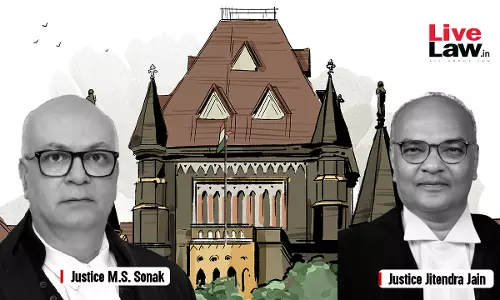
Routing Of Funds Through Tax Havens Not Disclosed During Original Proceedings: Bombay HC Confirms Reassessment
Finding that the Petitioner had failed to disclose all material facts necessary for assessment of tax, the Bombay High Court ruled that the circuitous movement of funds through various companies located in tax havens had not been disclosed in the course of the original proceedings.The High Court therefore confirmed the reopening proceedings initiated against the petitioner.A division bench...
JCIT Not Empowered To Issue Sanction For Reassessment Under Proviso To S.151(1) Of Income Tax Act: Delhi High Court
The Delhi High Court has held that sanction for initiation of reassessment action against an assessee under the proviso to Section 151(1) of the Income Tax Act 1961, cannot be issued by the Joint Commissioner of Income Tax.Section 151(1) contemplates issuance of sanction by JCIT for initiating reassessment action under Section 148 against an assessee who has already undergone...
Income Escapement | Value Determined At S.148A(d) Stage Relevant To Determine Threshold U/S 149 Of Income Tax Act: Delhi HC
The Delhi High Court has held that when determining whether a reassessment action meets the ₹50 lakh threshold prescribed under Section 149 of the Income Tax Act 1961, the value of income that allegedly escaped assessment as determined by the Assessing Officer at Section 148A(d) stage is relevant.A division bench of Justices Vibhu Bakhru and Tejas Karia clarified that the value alleged by...
Income Alleged To Have Escaped Assessment In Different Years Can't Be Consolidated To Meet ₹50 Lakh Threshold U/S 149 Of Income Tax Act: Delhi HC
The Delhi High Court has held that an Assessing Officer cannot add income that allegedly escaped assessment in different previous years, to meet the threshold of ₹50 lakh prescribed under Section 149(1)(b) of the Income Tax Act 1961 for initiating reassessment action after lapse of three years.The provision bars issuance of reassessment notice under section 148 if three years have elapsed...
Delhi HC Sets Aside Reassessment Over Cash Deposits During Demonetisation, Says Order U/S 148A(d) Income Tax Act Transgressed Notice U/S 148A(b)
The Delhi High Court has set aside the reassessment action initiated against a partnership firm under Section 148A(d) of the Income Tax Act, 1961 over cash deposits made by it during demonetisation, stating that this ground was not mentioned in the notice issued to the firm under Section 148A(b).Section 148A(b) contemplates issuance of a notice asking assessee to show cause why...
S.13 Income Tax Act | Charitable Trust's Status Not Affected For Making Reasonable Payments On Services Rendered By Related Party: Delhi HC
The Delhi High Court has held that a Charitable Trust's status cannot be taken away citing violation of Section 13 of the Income Tax Act, 1961 merely because it made reasonable payment for services rendered by a related party.Ordinarily, Charitable Trusts are not allowed to make payments for the benefit of 'prohibited parties'.Section 13 states that exemptions to Charitable Trust under...