
High Courts

Not An Enabling Provision, Proscribes Reassessment Action Beyond Limitation: Delhi HC Explains Timelines U/S 149 Of Income Tax Act
The Delhi High Court has made it clear that Section 149 of the Income Tax Act, which prescribes a limitation period for initiating reassessment against an assessee, is not an enabling provision but rather a proscription on the Assessing Officer's powers.A division bench of Acting Chief Justice Vibhu Bakhru and Justice Tushar Rao Gedela observed,“The opening sentence of Section 149(1) of the...
Superannuation Fund | Limit On Deduction Of Employer's Contribution Applies To Initial/ Annual Contribution, Not Additional Payments: Delhi HC
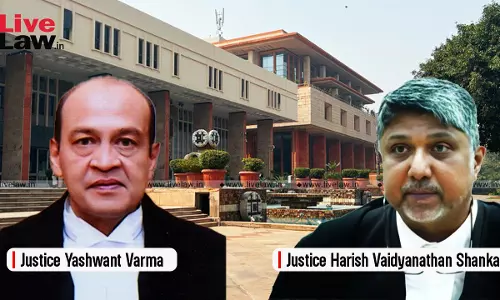
The Delhi High Court has held that the limit prescribed under Section 36(1)(iv) of the Income Tax Act 1961, on deductions that an employer can seek for contributions made towards superannuation funds, applies only at the stage of setting up the fund or making ordinary annual payments.A division bench of Justices Yashwant Varma and Harish Vaidyanathan Shankar said any contribution...
What Is The Time Period Surviving U/S 149 Of Income Tax Act For Issuing Reassessment Notices: Delhi High Court Explains
The Delhi High Court has interpreted the Supreme Court's decision in Union of India v. Rajeev Bansal to elucidate the time period surviving under Section 149 of the Income Tax Act, 1961 for issuing reassessment notices.A division bench of Justices Yashwant Varma and Harish Vaidyanathan Shankar concluded that the period between 20 March 2020 to 30 June 2021 would be excluded from limitation,...
Suo Moto Disallowance Made By Assessee Under Bonafide Belief Of Tax Liability Can Be Rectified U/S 264 Of Income Tax Act Without Amending ITR: Delhi HC
The Delhi High Court has held that an application for revision under Section 264 of the Income Tax Act, 1961 can be preferred by an assessee who makes suo motu disallowance in its Return of Income (RoI/ ITR), under a bonafide yet mistaken belief that the same was liable to be offered for taxation.A division bench of Justices Yashwant Varma and Harish Vaidyanathan Shankar added that the...

Date Of Assessment Order Recommending Penalty For Accepting Cash Above ₹2 Lakh Not Relevant For Determining Limitation U/S 275 Of Income Tax Act: Delhi HC
The Delhi High Court has held that the date of the assessment order, wherein an Assessing Officer recommended separate penalty proceedings against the assessee under Section 271DA of the Income Tax Act, 1961 for accepting more than ₹2 lakh in cash, is not relevant for determining the limitation period under Section 275(1)(c).Section 275(1)(c) prescribes the period of limitation within...
Fees Paid By Law Firm Remfry & Sagar To Use Name & Goodwill Of Founder Is Business Expense, Deductible U/S 37 Of Income Tax Act: Delhi HC
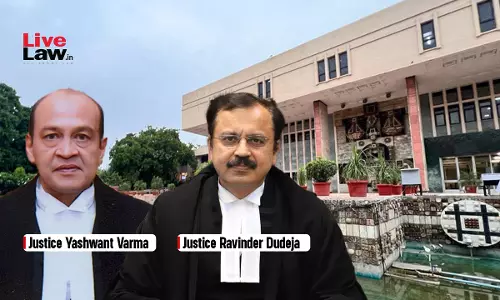
The Delhi High Court has held that the fees paid by IPR law firm Remfry & Sagar to acquire the goodwill vested in a company run by the family members of its deceased founder, is a business expense deductible under Section 37 of the Income Tax Act.A division bench of Justices Yashwant Varma and Ravinder Dudeja observed, “the primary, nay, sole purpose for incurring expenditure...
Merely Paying Penalty For Wilful Delay In Filing Income Tax Returns Does Not Exonerate Assessee From Being Prosecuted: Karnataka High Court
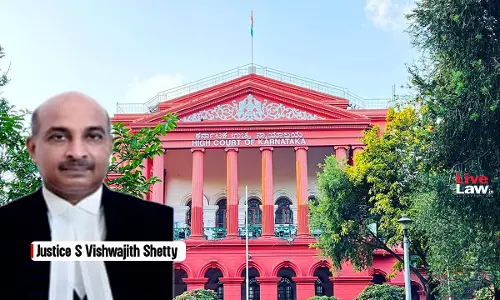
The Karnataka High Court has refused to quash prosecution initiated by the Income Tax Department against an assessee who had willfully failed to submit his income tax returns in time for the Assessment Years 2012- 13 to 2015-16 and thereby committed the alleged offence.A single judge, Justice S Vishwajith Shetty dismissed the petitions filed by Rajkumar Agarwal. It said, “Delay in filing of...

Tax Annual Digest 2024: Part III
Chewing Tobacco Packed In High-Density Polyethylene Bags Are 'Wholesale Package'; Cannot Be Taxed As Retail Product Under Excise Act : Supreme CourtThe Supreme Court recently held that pouches of chewing tobacco packed in High-Density Polyethylene (HDPE) bags would be considered a 'wholesale package' and could not be considered for imposing excise duty as per the provisions relating to...
Co-Owner Of Property Not Receiving Income From It Not Liable To Pay Tax On Income From Such Property: Delhi High Court
The Delhi High Court has held that where a property is held jointly but only one co-owner reaps the benefit of income from such property, the other co-owner cannot be held liable to pay tax merely by virtue of co-ownership.A division bench of Justices Yashwant Varma and Harish Vaidyanathan Shankar observed, “the [Income Tax] Act fails to raise any presumption in law, of income...

Money In Bank Account Is 'Property', Liable For Provisional Attachment U/S 281B Of Income Tax Act: Kerala High Court
The Kerala High Court held that cash in bank account is a 'property' liable for provisional attachment under section 281B of the Income Tax Act. The Division Bench of Justices Sathish Ninan and Shoba Annamma Eapen observed that “mere fact that Bank account is not explicitly provided under Section 281B of the Income Tax Act, unlike the GST Act, 2017 which specifically mentions the...
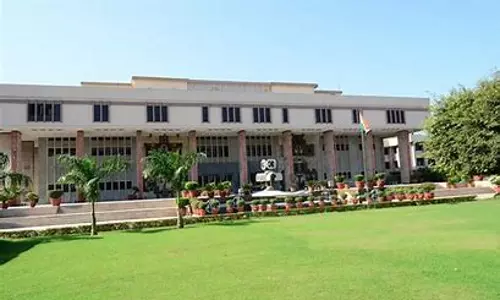
Time Spent To Defend Reassessment Notice Issued Without Following Procedure Doesn't Extend Limitation For Revenue When Issuing Fresh Notice: Delhi HC
The Delhi High Court has held that if the Revenue issues a reassessment notice to an assessee under Section 148 of the Income Tax Act, 1961 without following due procedure, it cannot later issue fresh reassessment notice beyond the prescribed period, claiming that time spent on earlier litigation is to be excluded for the purposes of computing limitation.A division bench of Acting Chief...
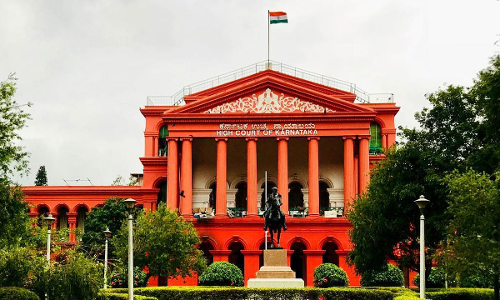
Proceedings Initiated Against Income Tax Assessee After His Death Cannot Be Continued Against Legal Representative: Karnataka HC
The Karnataka High Court has said proceedings initiated against an Income Tax Assessee by issuing notice after his demise cannot be continued against his/her legal representative.A division bench of Justice Krishna S Dixit and Justice G Basavaraja said, “Had the proceedings been initiated against the Assessee during his lifetime, they could have continued against the legal representatives...