
DEBT RECOVERY LAWS
SARFAESI - Fresh 30 Days Notice Not Needed If Failure To Conduct Sale As Per First Notice Was Due To Borrower's Actions : Supreme Court
If the sale of a mortgaged property as per the SARFAESI Rules was interrupted during the 30 days notice period due to the actions of the borrower, a fresh notice of 30 days is not necessary for the sale process to resume after the interruptions are over, held the Supreme Court in a recent judgment.In the case S. Karthik v. N Subhash Chand Jain, the Court stated that a fresh notice is necessary only if the sale got stopped due to reasons which are not attributable to the borrower.A bench...
'Litigants In Distress' : Supreme Court Deprecates Centre's Practice Of Giving Additional Charge To DRT Of One State Over Another State Due To Unfilled Vacancies
The Supreme Court on Wednesday expressed disapproval of the Centre's practice of extending jurisdiction of Debts Recovery Tribunal of one state to another state due to unfilled vacancy of Presiding Officer.A special bench comprising the Chief Justice of India NV Ramana, Justice DY Chandhrachud and Justice L Nageswara Rao was hearing a petition filed by the State Bar Council of MP challenging a notification issued by the Central Government attaching the jurisdiction of DRT Jabalpur (Madhya...

DRAT Requests Punjab & Haryana HC To Initiate Contempt Action Against Lawyer Who Filed Multiple 'Contemptuous Complaints' Against Presiding Officers
The Debts Recovery Appellate Tribunal, Delhi has directed its Registrar to request the Punjab and Haryana High Court, to take appropriate action under Contempt of Courts Act, 1971 against Advocate Harinder Pal Singh with regard to the "contemptuous" allegations made by him against the Presiding Officers of DRTs.Advocate Singh had filed a complaint dated May 11, 2021 addressing the President of India, Prime Minister of India, Minister of Finance etc. against the Presiding Officer of DRTs 1 and 2,...
Presiding Officer Of Debts Recovery Tribunals Should Be Vigilant That Matters Are Taken Up Chronologically: Madras High Court
The Madras High Court has recently observed that the Presiding Officer of Debts Recovery Tribunals should be vigilant that matters are taken up chronologically. The Bench of Chief Justice Sanjib Banerjee and Justice P.D. Audikesavalu was hearing a plea filed by the State Bank of India complaining of the inordinate delay on the part of the DRT, Coimbatore, and seeking direction for the early disposal of a matter.Importantly, the Bench noted thus:"The present petitions are part of the...
Supreme Court Seeks Centre's Stand On Legality Of Attaching DRTs In One State To Those In Other States
The Supreme Court today issued notices to the Centre on a plea filed against Delhi High Court's order deferring by 6 weeks the challenge to validity and legality of the notification issued by the Union Ministry of Finance transferring & attaching the jurisdiction of Debt Recovery Tribunal, Jabalpur to Debt Recovery Tribunal, Lucknow in the absence of availability of presiding officer at DRT Jabalpur. The Petition has been filed by M.P State Bar Council through AOR Mrigank Prabhakar...

Securitization of Financial Assets: A Potent Panacea To Non-performing Assets
With burgeoning of globalization & liberalization, there has been a paradigmatic shift in the role banks and other financial institutions in shaping Indian Economy. Banks & Financial institutions constitute the bedrock of any economy and, for any economy to realize its acme it must have a bolstered banking sector. Albeit in recent times perhaps just after the beginning of this millennium until the devastating financial crisis of 2008 and thereafter, banking sector has been grappled with...
Tracing The Formation Of The Insolvency And Bankruptcy Code 2016 And What Makes It A Game-Changer
Members of a company have the option of limiting their liabilities, hence it has always been one of the most preferred forms of conducting business. A company is a registered association having perpetual succession, a separate legal entity, common seal whose shares are transferable having limited liability. In order to comprehend the Insolvency and Bankruptcy Code 2016 effectively and to analyse its implementation critically, it is important to understand the pre-existing legal framework...
Interim Order In Writ Petition Challenging SARFAESI Proceedings Should Generally Not Be Passed Without Hearing Secured Creditors: Supreme Court
The Supreme Court has observed that interim orders in writ petitions challenging SARFAESI proceedings should generally not be passed without hearing the secured creditor.Interim orders defeat the very purpose of expeditious recovery of public money, said the bench comprising Justices L. Nageswara Rao, Hemant Gupta and Ajay Rastogi. Therefore, the High Court should be extremely careful and circumspect in exercising its discretion to grant stay in such matters, the court said.The court noted that,...
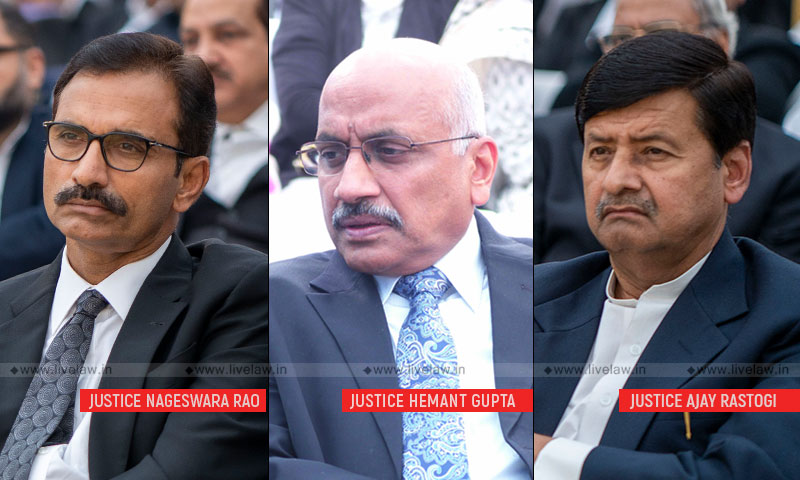
[SARFAESI] Time Limit Stipulation For District Magistrates To Deliver Possession Of Secured Asset Is Not Mandatory: Supreme Court [Read Judgment]
The Supreme Court has held that time limit stipulation in Section 14 of the SARFAESI Act mandating the District Magistrate to deliver possession of a secured asset, is directory and not mandatory and that the inability to take possession within time limit does not render the District Magistrate Functus Officio.The bench comprising Justices L. Nageswara Rao, Hemant Gupta and Ajay Rastogi upheld a judgment of Division Bench of Kerala High Court which held that Section 14 of the Securitisation and...

Rate Of Interest For Pendente Lite And Future Period
This article is primarily in relation to the Original Applications (OAs) filed by banks and Financial Institutions (FIs) in Debt Recovery Tribunals (DRTs) under the provisions of Recovery of Debt and Bankruptcy Act, 1993 (RDB Act, 1993) Pendente Lite period means the period from the date of filing of the suit upto the date of judgment. Future period means the period from the date of judgment upto the date of realisation of the decretal amount. Nowadays banks and FIs are filing OAs...
![Can Banks Continue SARFAESI Proceedings With Respect To Loan Accounts Declared As NPA Prior To Lockdown? Kerala HC Seeks Response From Centre,State [Read Order]](http://beta.livelawbiz.com/h-upload/2020/03/02/500x300_370813-kerala-high-court-013.jpg "Can Banks Continue SARFAESI Proceedings With Respect To Loan Accounts Declared As NPA Prior To Lockdown? Kerala HC Seeks Response From Centre,State [Read Order]")
Can Banks Continue SARFAESI Proceedings With Respect To Loan Accounts Declared As NPA Prior To Lockdown? Kerala HC Seeks Response From Centre,State [Read Order]
The Kerala High Court has sought response from the Central Government about the banks' plea seeking permission to continue SARFAESI proceedings with respect to loan accounts which were declared as NPA prior to the declaration of lockdownThe Full bench comprising the Chief Justice S. Manikumar, Justices CT Ravikumar and Shaji P. Chaly was considering an application filed by State Bank of India and Canara Bank who sought a clarification whether they can continue with SARFAESI proceedings which...
RBI's Fair Practices Code For Asset Reconstruction Companies – A Respite Or Woe
Recently Reserve Bank of India (RBI) has advised Asset Reconstruction Companies (ARCs) to adopt 'Fair Practices Code' so as to ensure transparency and fairness in their operation and issued guidelines on 16th July 2020. Most of the guidelines issued are practically already in use of ARCs in one form or the other, as the actions and non-actions are always the subject matter of judicial review. Our present study is confined mainly to the following two aspects, which have been...