
VAT

KVAT Act | Input-Tax Credit Can Be Availed If Purchaser Has Genuine Invoices Even If Seller Fails To Remit Tax: Kerala High Court
The Kerala High Court, overruling its earlier decision in C.P. Rasheed v. State of Kerala, has held that input tax credit can be availed under the Kerala Value Added Tax Act, 2003 if the purchaser has genuine tax invoices even if the seller fails to remit tax.The bench opined that “the input tax credit can be legitimately availed by the purchasing dealer under the Kerala Value Added Tax Act, 2003, even in cases where the selling dealer failed to remit the tax due to the...

Dealers Cannot Claim Input Tax Credit For Purchases Linked To Exempt Sales Under UPVAT Act : Supreme Court
Emphasizing that tax statutes must be strictly construed with statutory language taking precedence over policy intent, the Supreme Court, in a case concerning the Uttar Pradesh Value Added Tax Act, 2008 (“VAT Act”), held that a dealer is not entitled to claim Input Tax Credit (“ITC”) on the purchase of goods where the subsequent sale of those goods is exempt from tax.“Section 13(7) outlines the circumstances under which such a benefit cannot be allowed. Section 13(7) also sets out that no...
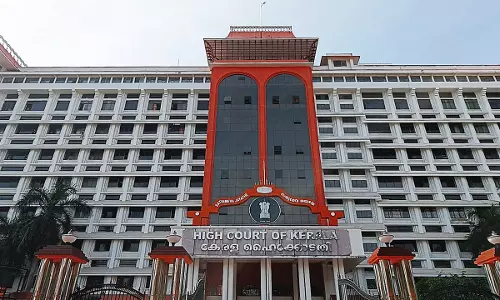
College Supplying Food Through Canteen Managed By Educational Trust Is Liable For Registration Under KVAT Act: Kerala High Court
The Kerala High Court held that college supplying food through canteen, though managed by educational trust, is liable for registration under KVAT Act. The bench disagreed with the assessee that even if it is assumed that the sales in the canteen are found to be assessable under the provisions of the VAT, it falls within the threshold limit and therefore, the assessee cannot be compelled to take registration. It may be true that the sales across the counter in the canteen may be...

Withholding Tax Refunds Without Justification Violates Section 55 Of JVAT Act: Jharkhand High Court
The Jharkhand High Court has held that withholding tax refunds beyond the statutorily prescribed period without adequate justification, violates Section 55 of the Jharkhand Value Added Tax Act, 2005, and deprives the taxpayer of rightful dues. The Court ruled that the refund must carry interest from the date the excess demand was determined, and non-allocation of funds by the State cannot override this obligation.In the words of the Division Bench comprising the Chief Justice MS Ramachadran Rao...

Delhi VAT | No Interest On Refund For Period Of Delay Attributable To Dealer: High Court
The Delhi High Court has held that if the delay in granting refund to a dealer under the Delhi Value Added Tax Act, 2004 is attributable to the dealer itself, such period of delay shall be excluded for the purposes of awarding interest on refund.Section 38(3)(a)(ii) of DVAT Act stipulates a period of two months for refund of excess tax, penalty, etc., if the period for refund is a quarter.A division bench of Justices Prathiba M. Singh and Rajneesh Kumar Gupta cited Explanation to Section 42(1)...
Revenue Cannot Re-Assess Time Barred Assessment Under KVAT Act Based On CAG Report: Kerala High Court
The Kerala High Court stated that revenue cannot re-assess time barred assessment under KVAT Act based on CAG report. The Division Bench of Justices A.Y. Jayasankaran Nambiar and Easwaran S. observed that “there cannot be an exercise of power under Section 25A of the KVAT Act beyond the period of limitation prescribed under Section 25(1) of the KVAT Act. In fact the provisions of Section 25A allude to this aspect when it refers to the satisfaction to be recorded by the Assessing...

Supreme Court Upholds Allahabad HC Decision That Chargers Sold With Cell Phones Cannot Be Taxed Separately Under UP VAT Act 2008
The Supreme Court recently upheld the decision of the Allahabad High Court which observed that the charger sold with a cell phone under the MRP cannot be taxed separately under the UP VAT Act 2008. The bench of Justice BV Nagarathna and Justice SC Sharma was hearing a challenge to the order of the Allahabad High Court which held that a mobile charger contained in a composite package with the cell phone cannot be taxed separately under Entry 28 Part B Schedule II U.P. VAT Act 2008. The...

Benefit Of Input Tax Credit Can't Be Reduced Without Statutory Sanction : Supreme Court
The Supreme Court recently held that Rule 21(8) of the Punjab Value Added Tax Rules, 2005, which was notified on January 25, 2014, could not be applied to transactions before April 1, 2014, as the enabling amendment to Section 13 of the parent statute, the Punjab Value Added Tax Act, 2005, was effective from that date.This means businesses that bought goods at a higher tax rate before this date are not subject to the limitation imposed by Rule 21(8) when claiming ITC, even if the tax rate was...
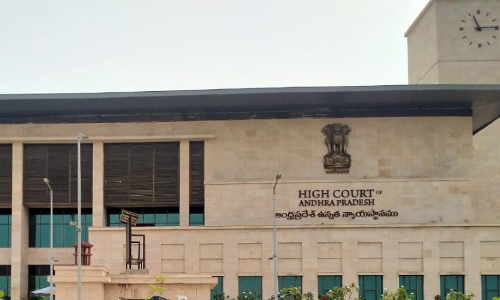
Andhra Pradesh VAT Act | Pleadings On Suppression Of Material Facts, Wilful Evasion Of Tax Are Sine Qua Non For Invoking S.21(5): High Court
The Andhra Pradesh High Court has held that pleadings relating to suppression of material facts, in an assessment order are the sine qua non for invoking section 21(5); by way of which limitation for filing an assessment order is extended to 6 years from 4 years. "There is nowhere any mention of suppression of facts, much less, wilful suppression of facts, resulting in wilful evasion of tax, which is the sine qua non, for invoking Section 21(5) of the Act. In such circumstances, the...

Penalty Provision U/S 16(7) HP VAT Act Cannot Be Invoked Without First Ascertaining Applicability Of S.16(4): Himachal Pradesh High Court
The Himachal Pradesh High Court has held that the penalty provision couched in Section 16(7) of the HP Value Added Tax Act, 2005 cannot be invoked until the statutory authority is satisfied regarding the applicability of Section 16(4) of the Act.Section 16(4) requires a registered dealer to pay the full amount of tax due from him into a Government Treasury before it furnishes the return. Failure to do so attracts a penalty under Section 16(7).A division bench of Justices Tarlok Singh Chauhan and...

Outstanding Demand Under Maharashtra Settlement Can't Be Adjusted Against Refund Payable Under Maharashtra VAT Act: High Court
The Bombay High Court held that authorities under MVAT Act while exercising powers under Maharashtra Settlement of Arrears of Taxes, Interest, Penalties or Late Fees Act, 2022, cannot invoke provisions of Section 50 of MVAT and that too in review proceedings under Settlement Act.The Division Bench of Justice M. S. Sonak and Justice Jitendra Jain observed that there is no provision under Settlement Act which provides for calculation of outstanding arrears of a particular year to be arrived at...
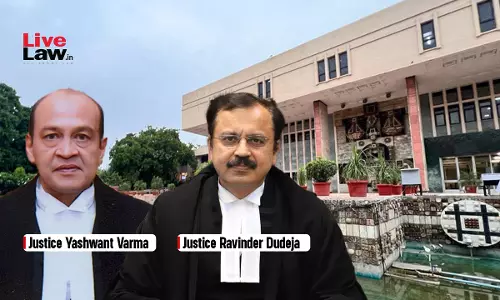
DVAT Act | Assessee 'Automatically' Becomes Entitled To Interest U/S 42 On State's Failure To Adhere To Mandatory Timelines For Refund: Delhi HC
The Delhi High Court has made it clear that when a refund of tax or penalty paid in excess under the Delhi Value Added Tax Act, 2004 is delayed by the authorities, the assessee “automatically” becomes entitled to interest on such refund.Section 38(1) “obligates” the Commissioner to refund the amount of tax, penalty or interest, if paid by a person in excess of the amount due from him.Section 38(3)(a) provides the timeline for a refund from the date on which the return is furnished or the claim...