
High Court
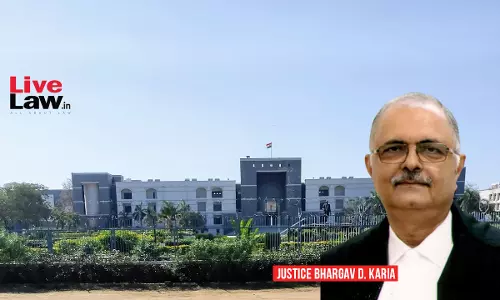
State Tax Authorities Not Mandated To Issue DIN With Orders Or Summons: Gujarat High Court
The Gujarat High Court stated that state tax authorities not mandated to issue din with orders or summons. The Division Bench of Justices Bhargav D. Karia andP.M. Ravalobserved that “there is no mechanism of issuance of DIN on any of the communication, notice, summons, orders issued by the State Tax Authorities. In such circumstances, the contention raised on behalf of the...
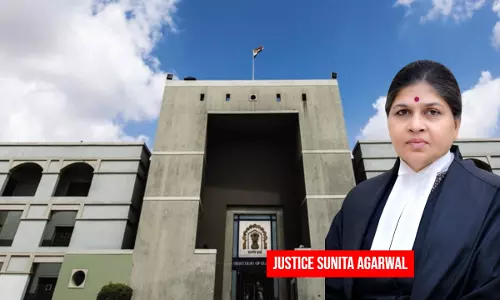
When Court Lacks Jurisdiction To Entertain Application U/S 34 Of Arbitration Act, It Cannot Set Aside Award On Merits: Gujarat High Court
The Gujarat High Court bench of Chief Justice Sunita Agarwal and Justice D.N. Ray and has held that Once the Court lacked jurisdiction to entertain the Section 34 application—having been filed beyond the limitation prescribed under Section 34(3) and its proviso—any finding on the validity of the arbitral award as void ab initio was without legal authority. Entertaining...
Omission Of Rule 96(10) Of CGST Rules Operates Prospectively But Applies To All Pending Proceedings: Gujarat High Court
The Gujarat High Court stated that omission of Rule 96(10) Of CGST Rules, 2017 operates prospectively but applies to all pending proceedings. The Division Bench of Justices Bhargav D. Karia and D.N. Ray was addressing the issue where a group of petitions have challenged the vires of Rule 96(10) of the Central/State Goods and Services Tax Rules, 2017 as substituted by the Central...
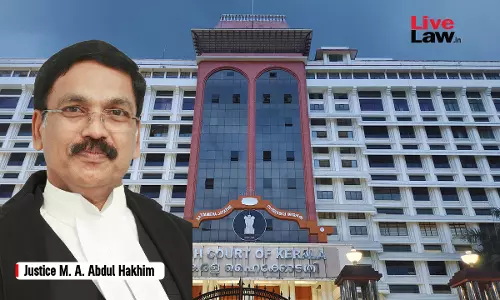
New Arbitrator Must Initiate Proceedings Afresh When Previous Arbitrator's Appointment Is Void Ab Initio: Kerala High Court
The Kerala High Court bench of Justice M.A. Abdul Hakhim has held that where an arbitral award is set aside on the ground that the appointment of the arbitrator was void ab initio and the arbitral proceedings are declared non est, the new arbitrator must initiate proceedings afresh. The question of admissibility of previously recorded evidence is to be decided by the...
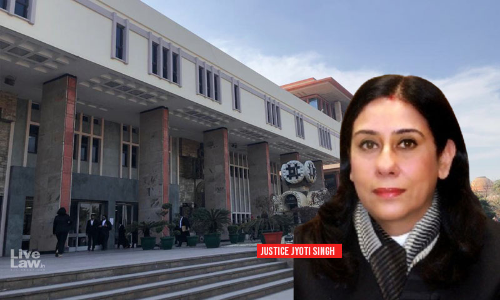
Arbitration Clause Allowing MD To Appoint Sole Arbitrator After Failure Of Appointment By Mutual Consent Violates SC's Order: Delhi High Court
The Delhi High Court bench of Justice Jyoti Singh has held that the clause in question indeed contemplates the appointment of an Arbitrator by mutual consent; however, in the event of failure, it vests the power of appointing a Sole Arbitrator with the Managing Director of Respondent No. 1. It further held that the Company acting through its Managing Director will have interest...
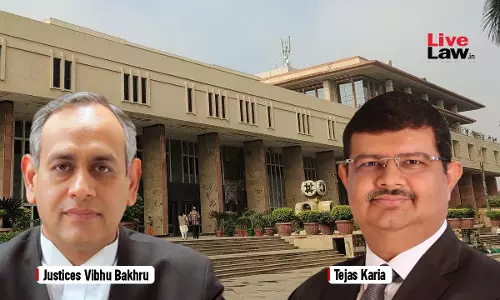
Recourse To External Correspondences To Interpret Clause Despite Clear & Unambiguous Terms Amounts To 'Patent Illegality': Delhi High Court
The Delhi High Court bench comprising Justice Vibhu Bakhru and Justice Tejas Karia has held that when the language of the contract is plain, clear and unambiguous, recourse to internal aids of interpretation or extraneous materials such as negotiations and correspondence is impermissible. “Ignoring an explicit clause of the contract or acting contrary to the terms of the contract...
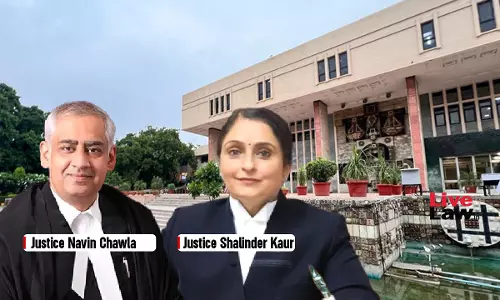
Once Right To File Written Statement Is Closed, Application U/S 8 Of Arbitration Act Can't Be Entertained: Delhi High Court
The Delhi High Court bench of Justices Shalinder Kaur and Navin Chawla has held that once the right to file a written statement is closed, an application under Section 8 of the Arbitration and Conciliation Act seeking reference to arbitration is not maintainable. Brief Facts: This Regular First Appeal under Section 13 of the Commercial Courts Act, 2015 challenges the judgment...

Right To Appoint Arbitrator Is Not Automatically Forfeited After Expiry Of 30 Days From Date Of Demand Made By Other Party: Gauhati High Court
The Gauhati High Court bench of Justice Yarenjungla Longkumer has held that if an arbitrator is not appointed within 30 days of the demand by the other party, the right to appoint is not automatically forfeited. However, such appointment must be made after the 30-day period but before the other party files an application under Section 11 of the Arbitration Act. This is a petition...
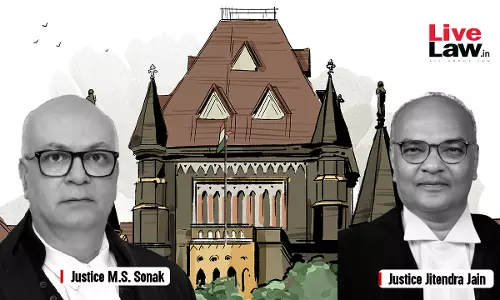
Treaty Provisions Don't Override Customs Law: Bombay High Court Upholds SCN Issued For Alleged Misuse Of Import Exemptions
The Bombay High Court stated that treaty provisions don't override customs law and upheld the show cause notices issued for alleged misuse of import exemptions. The Bench consists of Justices M.S. Sonak and Jitendra Jain observed that based on a treaty provision that is not transformed or incorporated into the national law or statute, the provisions of the existing Customs Act...
Cash Credit Account Cannot Be Treated As Property Of Account Holder Which Can Be Considered U/S 83 Of GST Act: Bombay High Court
The Bombay High Court stated that cash credit account cannot be treated as property of account holder which can be consider under Section 83 of GST Act. The Division Bench of Justices M.S. Sonak and Jitendra Jain observed that the phrase 'including bank account' following the phrase, “any property” would mean a non-cash-credit bank account. Therefore, a “cash credit...
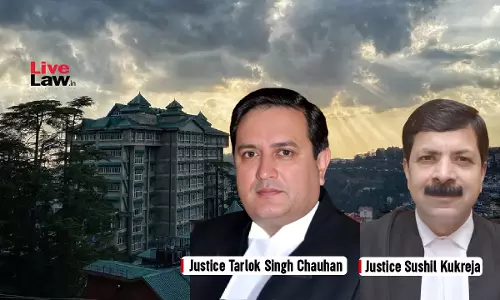
Assessing Officer Can't Act As Prosecutor, Judge And Executor At The Same Time: Himachal Pradesh High Court
Himachal Pradesh High Court held that the Assessing officer must provide the university a fair opportunity to present its case and can't take law in his own hand by acting as a Prosecutor, Judge and Executor at the same time.Justice Tarlok Singh Chauhan & Justice Sushil Kukreja: “The Assessing officer took the law into his own hand and played as a Prosecutor, Judge and Executor at the...

In Interconnected Agreements, Use Of Word 'May' Does Not Defeat Clear Intention To Arbitrate In Main Agreement: Telangana High Court
The Telangana High Court bench of Justice K. Lakshman has held that in case of interconnected agreements, where the mother agreement clearly and unequivocally refers the disputes to arbitration, mere use of 'may' in the arbitration clause of one of the ancillary agreements will not defeat the intention to arbitrate. Brief Facts: This application has been filed under section 11(6)...