
High Courts
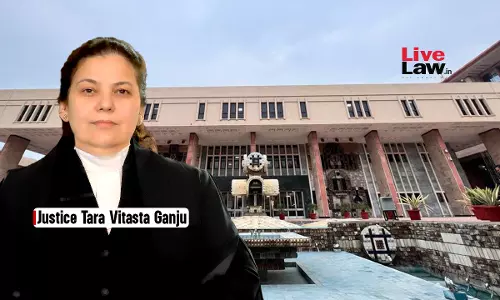
Delhi High Court Transfers Winding-Up Petitions Against Vigneshwara Developwell Pvt Ltd To NCLT
The Delhi High Court has transferred winding-up petitions filed against Vigneshwara Developwell Pvt Ltd to the NCLT. The petition was filed under Sections 433(e), 434, and 439 of the Companies Act, 1956, seeking winding up of the respondent company due to its inability to pay the debt of the petitioner. During the pendency of the petition, an application was filed for the transfer of the matter to NCLT, New Delhi and the court was pleased to transfer the matter. The Companies...
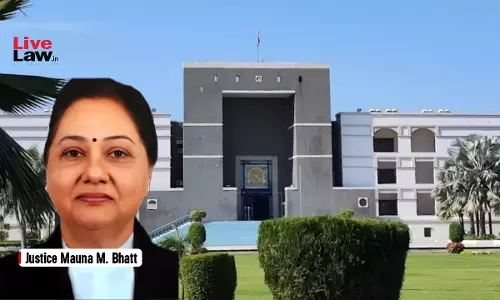
Gujarat High Court Stays IBBI Disciplinary Committee's Order Suspending Resolution Professional For 6 Months
The Gujarat High Court last week stayed an order issued by Insolvency and Bankruptcy Board of India (IBBI) which had suspended the registration of an insolvency resolution professional for six months pursuant to disciplinary proceedings. The court passed the order after the petitioner questioned the procedure by which the disciplinary proceedings were conducted. Justice Mauna M Bhatt issued notice on the petitioner's plea challenging an August 20 order passed by the Disciplinary...

State Gains Revenue Only If Businesses Operate; Cancelling GST Registration On Procedural Grounds Serve No Purpose: Calcutta High Court
The Calcutta High Court stated that the state gains revenue only if business operates; GST registration cancellation on procedural grounds serves no purpose. Justice Aniruddha Roy stated that the cancellation of GST registration of the assessee on the procedural ground would not enure any benefit either to the revenue authority or to the assessee. On the contrary, if the GST certificate stands restored and the assessee is allowed to carry on its business, the State can earn revenue to...

Absence Of Disciplinary Proceedings Bars NCLT From Rejecting Proposed IRP Under IBC: Madras High Court
The Division Bench of Madras High Court, comprising Justice Dr. Anita Sumanth and Mr. Justice N. Senthilkumar, has held that in the absence of disciplinary proceedings pending against the professional, NCLT is bound to appoint the IRP proposed by the applicant under sections 7 and 10 of the IBC, 2016. Background of the Case The petition under Article 226 was filed to quash the appointment of Mr. Thangamuthu as the IRP of the corporate debtor. The petitioner is an insolvency ...

Insolvency Resolution Professional Is Public Servant, Sanction Needed To Prosecute Him Under Prevention Of Corruption Act: Madras High Court
The Madras High Court has recently directed the Insolvency and Bankruptcy Board of India to consider granting sanction for prosecuting a Resolution Professional for allegedly mismanaging funds of a company during a resolution process. Justice Bharatha Chakravarthy noted that the resolution professional performed duties in connection with the administration of justice, was a person from whom a report was called for by the court of justice, and was performing a public duty. Thus, the...
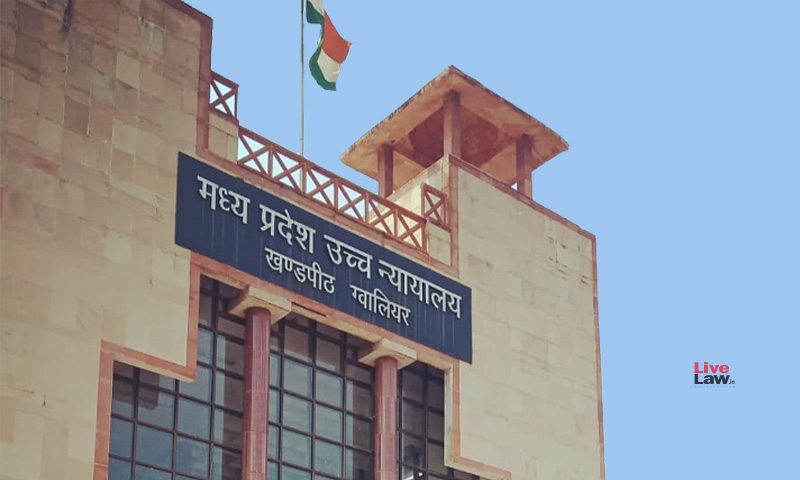
DM Can Re-Execute Possession Orders U/S 14 Of SARFAESI Act After Illegal Re-Entry By Borrower: MP High Court
A division bench of Madhya Pradesh High Court, comprising Justice Anand Pathak and Justice Hirdesh, has allowed an appeal and upheld that a district magistrate can re-execute possession orders u/s 14 of the SARFAESI Act after illegal re-entry by the borrower. The Court directed the respondent authorities to provide necessary assistance to the petitioner to dispossess the borrower from the mortgaged property. Background of the Case The petitioner granted a certain mortgage loan...
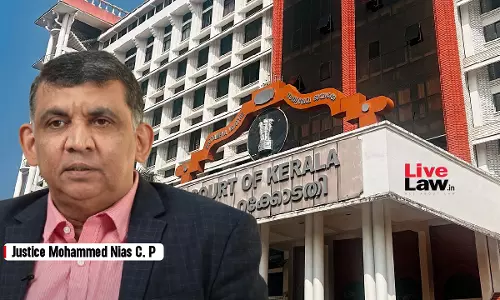
DRT Cannot Reject Consolidated Plea By Tenants Under SARFAESI Act: Kerala High Court
The Kerala High Court has held that the Debts Recovery Tribunal (DRT) cannot reject a consolidated plea by tenants under the SARFAESI Act.The petition was filed, challenging an order passed by the registrar of the DRT 1, Ernakulam. By that order, it declined to register the application preferred by the petitioners against the notice of dispossession served by the Advocate Commissioner. The application was rejected, citing the reason that a consolidated securitisation application was filed...
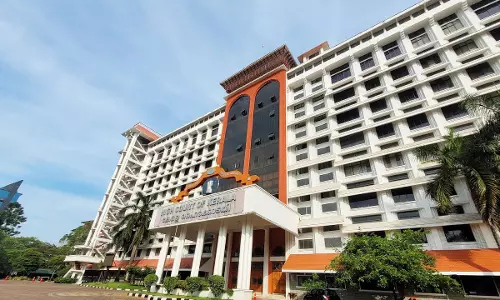
Writ Petition Is Maintainable Despite Remedy Under IBC, If NCLT Order Is Passed In Violation Of Natural Justice: Kerala High Court
The present writ petition was filed seeking the quashing of an order passed by the NCLT, Kochi Bench. By that impugned order, the adjudicating authority has directed the resolution professional to reject the claim filed by the home buyers, including the petitioner. The corporate debtor, who is the builder and the landowner, entered into an agreement to construct the building named Kerl Trade Centre at Marine Drive, Cochin. Sale deeds were executed by the landowners in favor of the...
Scheme Of Compromise Sanctioned By Court Under Companies Act Cannot Be Frustrated By Invoking Provisions Of SARFAESI Act: Calcutta HC
The Calcutta High Court has ruled that a scheme of arrangement/compromise sanctioned under section 391 of the Companies Act, 1956, cannot be unilaterally frustrated by a secured creditor by invoking the provisions of the SARFAESI Act, 2002. The application was filed, praying for the execution of an order sanctioning a scheme of arrangement/ compromise under section 391(2) of the Companies Act, 1956, as a deemed decree within the meaning of CPC, 1908. The applicant also requested the...
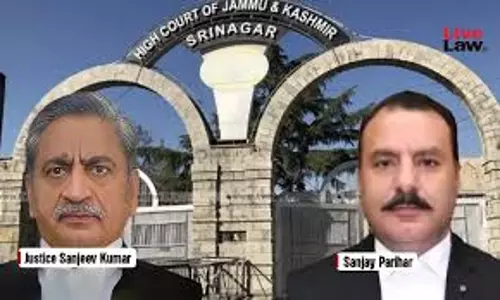
SARFAESI Act | Fresh Notice To Legal Heirs Of Borrower Not Necessary To Take Possession Under S.14: J&K High Court
The Jammu & Kashmir High Court has held that a secured creditor is not required to issue a fresh notice to the legal heirs of a deceased borrower before invoking Section 14 of the Securitisation and Reconstruction of Financial Assets and Enforcement of Security Interest (SARFAESI) Act, 2002.A Division Bench of Justice Sanjeev Kumar and Justice Sanjay Parihar dismissed a writ petition challenging the proceedings initiated by the bank under Section 14, observing that once notice under Section...
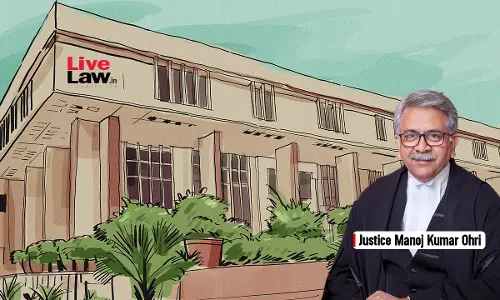
Writ Jurisdiction Cannot Be Invoked When Party Has Already Approached DRT Under SARFAESI Act: Delhi High Court
The Delhi High Court has dismissed a petition while upholding that if a borrower has already approached the Debt Recovery Tribunal (DRT) under the SARFAESI Act, for a one-time settlement, a writ seeking the same relief under Article 226 of the Constitution is not maintainable. Background of the Case The petitioner has availed the credit facilities from the consortium of banks, i.e., Punjab National Bank, Indian Bank, and UCO Bank. Later on, the account of the petitioner was declared...

NCLT Is Bound To Appoint IRP Proposed By Corporate Debtor: Madras High Court
The Madras High Court on Monday held that the suggestions of the financial creditor, operational creditor, or corporate debtor with regard to the appointment of the IRP are liable to be accepted. While hearing a writ petition challenging the appointment of an Interim Resolution Professional (IRP) by the National Company Law Tribunal (NCLT), Chennai, the Madras High Court interpreted Sections 10 and 16 of the Insolvency and Bankruptcy Code, 2016. The petition was filed challenging the...