
INCOME TAX

S.36(1)(vii) Income Tax Act | Closing Individual Debtor Accounts Not Mandatory For Bad Debt Deduction: Kerala High Court
The Kerala High Court stated that closing individual debtor accounts is not mandatory for bad debt deduction under Section 36(1)(vii) of the Income Tax Act, 1961. Section 36(1)(vii) of the Income Tax Act, 1961, deals with the deduction of bad debts. It allows the taxpayer to claim a deduction for bad debts that have been written off in the books of accounts during the previous...
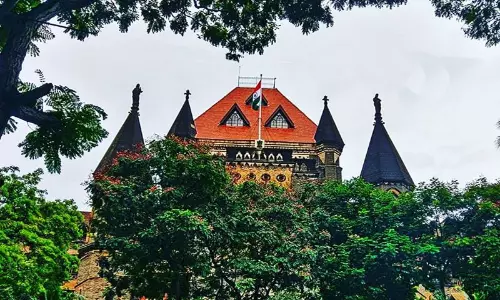
'Don't Blindly Trust AI'; Bombay High Court Quashes Income Tax Assessment Passed On Unverified AI-Generated Case Laws
The Bombay High Court has quashed an income tax assessment after noting that the Assessing Officer had relied upon non-existent, AI-generated case laws while passing the assessment order. The Court stated that in the era of Artificial Intelligence, the tax authorities cannot blindly rely on such AI-generated results. AI-generated case laws must be cross-verified before using them...

Delhi High Court Dismisses Income Tax Dept's Appeals Against Remfry & Sagar Law Firm Over Goodwill License Fees
The Delhi High Court has upheld an order of the ITAT allowing IPR law firm Remfry & Sagar to treat the license fees paid by it to acquire its founder's goodwill, as a business expense deductible under Section 37 of the Income Tax Act.A division bench of Justices V. Kameswar Rao and Vinod Kumar thus dismissed the appeals preferred by the Income Tax Department against the firm.The Court...
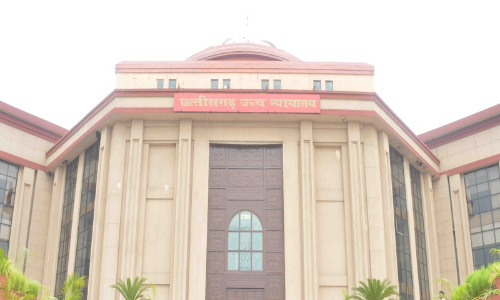
Income Tax Act | Failure To Raise Timely Objection To Jurisdiction U/S 143(2) Bars Assessee From Challenging Assessment: Chhattisgarh HC
The Chhattisgarh High Court held that failure to raise a timely objection to jurisdiction under Section 143(2) of the Income Tax Act bars the assessee from challenging the assessment. Justices Sanjay K. Agrawal and Radhakishan Agrawal stated that the assessee also did not raise any objection regarding jurisdiction upon completion of his assessment. As such, the plea with regard to...
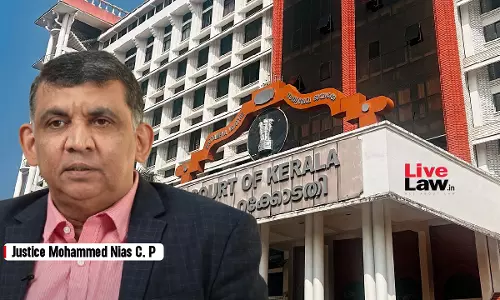
Limitation Under Rule 68B Of Income Tax Act Does Not Apply To RDDB Act Proceedings: Kerala High Court
The Kerala High Court held that the limitation under Rule 68B of the second schedule to the Income Tax Act does not apply to RDDB Act (Recovery of Debts Due to Banks and Financial Institutions Act, 1993) proceedings. Justice Mohammed Nias C.P. stated that Rule 68B of the Second Schedule to the Income Tax Act, 1961, has no mandatory application to recovery proceedings under the RDDB...
Income Tax Act | Non-Production Of Form 3CL Isn't Material Suppression; Not Grounds To Reopen Assessment U/S 147: Kerala High Court
The Kerala High Court held that the non-production of Form 3CL is not material suppression and is not a valid ground to reopen the assessment under Section 147 of the Income Tax Act. Under Section 35(2AB) of the Income Tax Act, 1961, any expenditure on scientific research is allowable as a deduction. A sum equal to one and one-half times the expenditure is allowed as such a...

Non-Resident Company Need Not Have Permanent Office In India To Be Taxed On Income Accruing Here : Supreme Court
The Supreme Court has clarified that under the Income Tax Act, a non-resident company can be taxed in India on income that accrues or arises from a business connection within the country, even if it does not maintain a permanent office or physical establishment here.A Bench of Justice Manoj Misra and Justice Joymalya Bagchi, in its judgment examined the scope of Sections 4, 5(2), and 9(1)(i)...
Assessment Order Not Void Solely Because It Was Passed in Deceased's Name: ITAT Chandigarh
The Income Tax Appellate Tribunal (ITAT), Chandigarh Bench, recently held that an appellate order passed by the Commissioner of Income Tax (CIT), reassessing the income tax liability of an assessee, is not invalid merely because it was issued in the name of a deceased person. The Tribunal noted that since the appeal itself was filed under the deceased's name, the order cannot be quashed on...

Income Tax Act | Deputy Commissioner Cannot Act Beyond DRP Directions; Assessment After S.144C(13) Time Limit Invalid: Bombay High Court
The Bombay High Court stated that the Deputy Commissioner cannot act beyond the dispute resolution panel (DRP) directions; assessment completed beyond Section 144C(13) of the Income Tax Act, 1961, the time limit is invalid. Section 144C(13) of the Income Tax Act, 1961 mandates the completion of the assessment within one month from the end of the month in which DRP directions are...
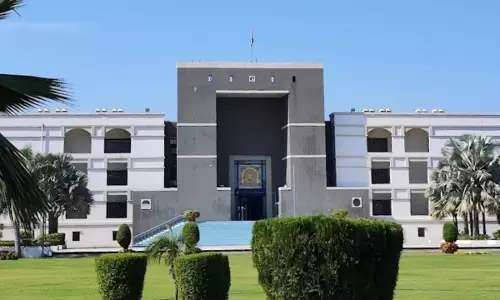
Income Tax | Manual Filing Of Appeal By NRI Valid For DTVSV Scheme Benefits: Gujarat High Court
The Gujarat High Court held that the manual filing of an appeal by an NRI is valid for DTVSV (Direct Tax Vivad Se Vishwas Scheme, 2024) Scheme Benefits. Justices Bhargav D. Karia and Pranav Trivedi were addressing the case where the petitioner/assessee has challenged the communication issued by the respondent authorities, whereby the declaration made by the assessee under the Direct...
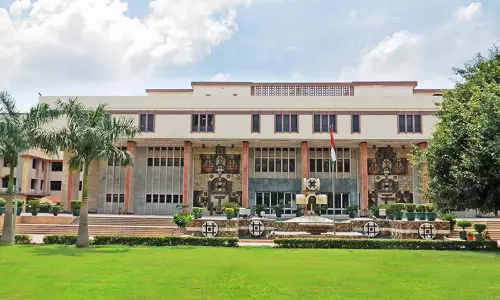
Delhi High Court Drops Suo Moto Contempt Action Against Income Tax Officer For Allegedly Passing Unreasoned Order
The Delhi High Court has dropped the civil contempt proceedings initiated against a Principal Commissioner of Income Tax (now retired) six years ago, for alleged wilful disobedience of its order to give reasons for insisting an assessee to deposit 20% demand in appeal.The proceedings were initiated suo moto in 2019 on a prima facie opinion but on a closer scrutiny, Justice Vikas Mahajan now...
Income Tax Act | Assessee Can Challenge Cash Credit Addition U/S 68 In Remand Proceedings; Tribunal's Direction Not Binding: Kerala High Court
The Kerala High Court held that the assessee is free to challenge the cash credit addition under Section 68 of the Income Tax Act in remand proceedings; the tribunal's directions are not binding. As per Section 68 of the Income Tax Act, 1961, any sum found credited in the books of a taxpayer, for which he offers no explanation about the nature and source thereof or the...