
High Courts

Kerala High Court Quashes Income Tax Appellate Order Against AMMA, Directs Fresh Consideration
The Kerala High Court has set aside an order passed by the Commissioner of Income tax (Appeals), against the Association of Malayalam Movie Artists (AMMA), holding that the appellate authority failed to comply with the mandatory requirements under the Income Tax Act.Justice Ziyad Rahman A A, observed that the Commissioner of Income Tax (Appeals) erred by rejecting AMMA's appeal solely on...

Income Tax Act | Trust's Legitimate Tax Exemption Cannot Be Denied For Delay In Filing Form 10B: Madras High Court
The Madras High Court held that delay in filing Form 10B required under Section 44AB for the purpose of Section 12A(1)(b) of the Income Tax Act, 1961, is not a ground to deny legitimate exemption tax exemptions. Justice C. Saravanan observed that the assessee was registered as a “Trust” in the year 2017. Effectively, the assessee would have carried on operation as...

Income Tax Act | Revisional Power U/S 263 Cannot Be Invoked When AO Allows Deduction U/S 32AC After Proper Inquiry: Kerala High Court
The Kerala High Court stated that revisional power under Section 263 of the Income Tax Act cannot be invoked when Assessing Officer (AO) allowed deduction under Section 32AC after proper inquiry. Justices A. Muhamed Mustaque and Harisankar V. Menon opined that merely for the reason that AO extended the deduction claimed after carrying out investigations, the exercise of the power...
Approval From Higher Authority Mandatory For Issuing Notice U/S 148 Income Tax Act After Expiry Of 3-Year Limitation: Madras High Court
The Madras High Court has held that under the new regime, approval from a higher authority, such as the Principal Chief Commissioner of Income Tax or the Principal Director General, is mandatory to issue a notice under Section 148 of the Income Tax Act after the expiry of a three-year limitation period. Justice C. Saravanan stated that …….three years from the end of the...

Income Tax | Assessee Should Not Be Penalised For Delay In Filing Return Caused By CA's Belated Advice: Bombay High Court
The Bombay High Court has held that the assessee should not be penalised for the delay in filing the return caused by the chartered accountant's belated advice. The bench noted that the delay is not due to any negligence on the part of the assessee, but to inadequate advice by the Chartered Accountant, a fact admitted by him in his affidavit. Justices B.P. Colabawalla and Amit...

AO Cannot Rely Solely On Sales Tax Dept Data To Add Bogus Purchases Without Granting Cross-Examination: Bombay High Court
The Bombay High Court has held that the Assessing Officer (AO) cannot rely solely on Sales Tax Department Data for an income tax addition without granting cross-examination.Justices G.S. Kulkarni and Aarti Sathe stated that, "when the VAT assessment was pending adjudication, merely relying on the information of the Sales Tax Department without granting an opportunity to the Assessee...
S.263 Income Tax Act Can Be Invoked When AO Fails To Address Core Issue In Assessment Order: Kerala High Court
The Kerala High Court held that Section 263 of the Income Tax Act, 1961, can be invoked where the Assessing Officer (AO) fails to address a core issue in the assessment order. The bench opined that the main issue does not appear to have been addressed by the assessing authority while issuing an order under Section 143(3) of the Act. Since the assessment order does not appear to...
Income Tax Commissioner's Order For Reopening Assessment U/S 151 Income Tax Act Can Be In Words "Yes, I Am Convinced": Delhi High Court
The Delhi High Court has held that the Income Tax Commissioner's order granting sanction under Section 151 of the Income Tax Act 1961 for reopening assessment after four years of the relevant Assessment Year (AY) can be in the words— “Yes, I am convinced”.Section 151(1) of the Act categorically provides that no notice for reassessment shall be issued under Section 148 by the...
S.36(1)(vii) Income Tax Act | Closing Individual Debtor Accounts Not Mandatory For Bad Debt Deduction: Kerala High Court
The Kerala High Court stated that closing individual debtor accounts is not mandatory for bad debt deduction under Section 36(1)(vii) of the Income Tax Act, 1961. Section 36(1)(vii) of the Income Tax Act, 1961, deals with the deduction of bad debts. It allows the taxpayer to claim a deduction for bad debts that have been written off in the books of accounts during the previous...
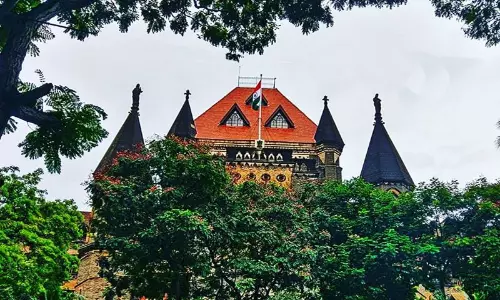
'Don't Blindly Trust AI'; Bombay High Court Quashes Income Tax Assessment Passed On Unverified AI-Generated Case Laws
The Bombay High Court has quashed an income tax assessment after noting that the Assessing Officer had relied upon non-existent, AI-generated case laws while passing the assessment order. The Court stated that in the era of Artificial Intelligence, the tax authorities cannot blindly rely on such AI-generated results. AI-generated case laws must be cross-verified before using them...

Delhi High Court Dismisses Income Tax Dept's Appeals Against Remfry & Sagar Law Firm Over Goodwill License Fees
The Delhi High Court has upheld an order of the ITAT allowing IPR law firm Remfry & Sagar to treat the license fees paid by it to acquire its founder's goodwill, as a business expense deductible under Section 37 of the Income Tax Act.A division bench of Justices V. Kameswar Rao and Vinod Kumar thus dismissed the appeals preferred by the Income Tax Department against the firm.The Court...
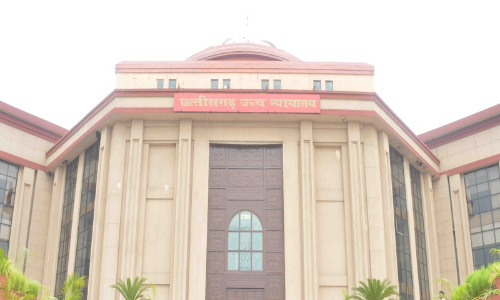
Income Tax Act | Failure To Raise Timely Objection To Jurisdiction U/S 143(2) Bars Assessee From Challenging Assessment: Chhattisgarh HC
The Chhattisgarh High Court held that failure to raise a timely objection to jurisdiction under Section 143(2) of the Income Tax Act bars the assessee from challenging the assessment. Justices Sanjay K. Agrawal and Radhakishan Agrawal stated that the assessee also did not raise any objection regarding jurisdiction upon completion of his assessment. As such, the plea with regard to...