
High Courts
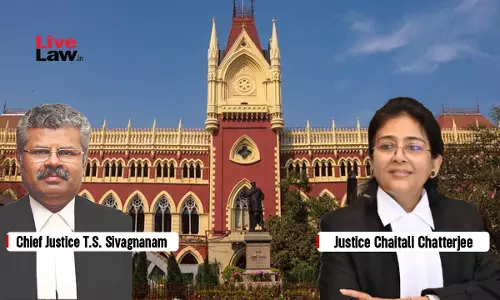
Stock Exchange & Banking Channels Cannot Mask Sham Transactions Carried Out Through Bogus Capital Loss Claim Companies: Calcutta High Court
The Calcutta High Court held that stock exchange and banking channels cannot mask sham transactions carried out through bogus capital loss claim companies. Justices T.S. Sivagnanam and Chaitali Chatterjee (Das) observed that “the entire information contained in the investigation report was apprised to the assessee by the assessing officer and thereafter the show cause notices...
Mere Incorporation Of Investing Companies Under Companies Act Not Enough To Prove Genuineness Of Share Transactions: Calcutta High Court
The Calcutta High Court held that mere incorporation of investing companies under the Companies Act is not enough to prove the genuineness of share transactions. The bench opined that, admittedly, the shares were by way of a private placement. Though the investing companies might have been incorporated under the provisions of the Company's Act, that by itself will not...
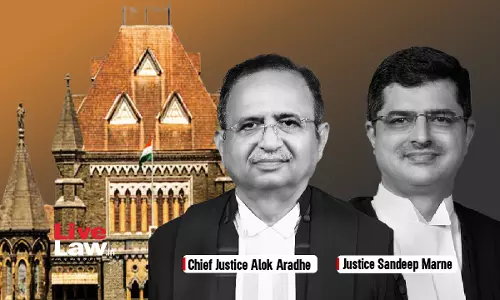
Income Tax | Sale Proceeds Of One House Used For Purchasing Multiple Residential Houses Qualifies For Exemption U/S 54(1): Bombay High Court
The Bombay High Court held that sale proceeds of one residential house, used for purchase of multiple residential houses, would qualify for exemption under Section 54(1) of the Income Tax Act. The issue before the bench was whether Section 54(1) of the Income Tax Act allows the Assessee to set off the purchase cost of more than one residential units against the capital gains earned...

Burden To Prove That Best Assessment By Income Tax Authorities Is Perverse Is On Assesee: Allahabad High Court
The Allahabad High Court has held that the burden to prove that the findings of best assessment done by the authorities is perverse is on the assesee. The bench of Justice Shekhar B. Saraf and Justice Praveen Kumar Giri held that “when a best assessment is done, it is for the assessee to bring on record the facts that may reveal that the findings are perverse in...
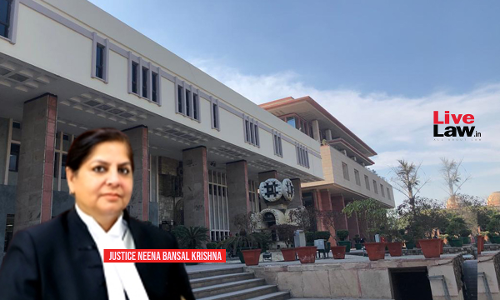
Unauthenticated Documents From Foreign Govt Regarding Swiss Bank Account Of Assessee Can't Form Basis For Criminal Action: Delhi HC
The Delhi High Court has quashed the criminal proceedings initiated against an assessee under Section 276C, 276D and 277 of the Income Tax Act 1961 merely on the basis of some unauthorised documents alleging existence of an undisclosed Swiss Bank account in his name.In doing so, Justice Neena Bansal Krishna observed,“Merely on some unauthenticated information received from a third Country...

Notice U/S 153C Income Tax Act Can Be Issued Only If Incriminating Material Has 'Bearing On Total Income' Of Non-Searched Assessee: Delhi HC
The Delhi High Court has made it clear that assessments under Section 153C of the Income Tax Act, 1961 can be made on a non-searched entity only when the Assessing Officer has incriminating material which “has a bearing” on its total income.Section 153C allows the Revenue department to proceed against a party other than the person who is being searched, if incriminating articles belonging...
[Income Tax] Filing Of Form 10-IC Prior To Filing Of Return Not Mandatory, Delay May Be Condoned In “Genuine Hardship”: Allahabad High Court
The Allahabad High Court has held that filing of Form 10-IC prior to filing of income tax return is not mandatory and the delay in filing the Form may be condoned in cases where “genuine hardship” is shown to exist. Form 10-IC, under the Income Tax Act, is required to filed only if a Domestic Company chooses to pay tax at concessional rate of 22% under Section 115BAA of...
Section 80IA Income Tax Act | Internal CUP Method Is Most Appropriate For ALP Determination In Captive Power Transactions: Calcutta High Court
The Calcutta High Court held that Internal CUP (Comparable Uncontrolled Price) method is most appropriate for ALP (Arm's Length Price) determination in captive power transactions. Chief Justice T.S. Sivagnanam and Justice Chaitali Chatterjee (Das) was addressing issue of whether the Internal Comparable Uncontrolled Price (CUP) method adopted by the assessee was right in determining...
Insurance Claim Received On Dead Horses Is Capital Receipt, Not Taxable As Income U/S 41(1): Bombay High Court
The Bombay High Court held that insurance claim received on dead horses is capital receipt, not taxable as income under Section 41(1) Of Income Tax Act. The bench opined that horses in respect of which the insurance claim was received were Assessee's capital assets and that therefore insurance receipt arising therefrom could only have been considered as capital receipt, not...
[Income Tax Act] Amount Indicated In P&L Account As Provision For Doubtful Debts/Advances Cannot Be Treated As "Reserve" U/S 115JA: Bombay HC
The Bombay High Court has ruled that a provision for doubtful debts cannot be treated as either a "reserve" or a "provision for liability" under clauses (b) or (c) of the Explanation to Section 115JA of the Income Tax Act, 1961, and thus cannot be added back to the book profits for the purpose of minimum alternate tax (MAT). The Court accordingly overturned the addition of ₹2.49 crore made...

Revisional Authority U/S 264 Of Income Tax Act Can Only Review Existing Orders, Cannot Issue Directions To Assessing Authority: Kerala HC
The Kerala High Court stated that the powers of revisional authority under Section 264 of the Income Tax Act is confined to reviewing existing orders, and the authority cannot issue directions to the assessing authority. Section 264 of the Income Tax Act, 1961 empowers the Principal Chief Commissioner, Chief Commissioner, Principal Commissioner, or Commissioner to revise...
![[Income Tax Act] Reassessment Beyond 4 Years Requires Specific Non-Disclosure By Assessee, Not Mere Allegations: Bombay High Court](https://www.livelaw.in/h-upload/2022/07/16/500x300_426138-bombay-high-court-calls-for-a-swift-legal-process-to-avoid-prolonged-incarceration.jpg "[Income Tax Act] Reassessment Beyond 4 Years Requires Specific Non-Disclosure By Assessee, Not Mere Allegations: Bombay High Court")
[Income Tax Act] Reassessment Beyond 4 Years Requires Specific Non-Disclosure By Assessee, Not Mere Allegations: Bombay High Court
The Bombay High Court stated that reassessment under Section 147 Income Tax Act beyond 4 years requires specific non-disclosure by assessee, not mere bald allegations. Section 147 of the Income Tax Act, 1961 provides for the reopening of assessment proceedings. This section gives discretion to the Assessing Officer (AO) to reopen the assessment proceedings when he/she has reason...