
Tax
Order Restraining Revenue From Taking Coercive Steps For Recovery Of Demand Can Interdict Adjustment Of Refunds: Delhi HC
The Delhi High Court has held that when an appellate authority has asked the Income Tax Department to not take any coercive steps against an assessee for recovery of outstanding demands, the same can in some cases interdict the Department from adjusting the outstanding amount from refunds due to the assessee.A division bench of Justices Vibhu Bakhru and Tejas Karia took note of a Punjab...

S.110 Customs Act | SCN Cannot Be Issued After One Year, Detention Of Goods Impermissible: Delhi High Court
The Delhi High Court has held that detention of goods by the Customs Department cannot continue beyond a period of one year, if a show cause notice was not issued to the assessee within such period.A division bench of Justices Prathiba M. Singh and Rajneesh Kumar Gupta cited Section 110 of the Customs Act, 1962 which prescribes a period of six months. Further, subject to complying with...

Can GST Act Timelines Be Relaxed For Bonafide Errors? Supreme Court Appoints Amicus Curiae, Issues Notice To CBIC
The Supreme Court recently issued notice to the Central Board of Indirect Taxes and Customs (CBIC) over the recurrent issue of not allowing rectification of bonafide errors made after the lapse of prescribed deadlines under the CGST Act. The bench of CJI Sanjiv Khanna and Justices Sanjay Kumar and KV Viswanathan was hearing a challenge by the Union against the decision of the Bombay High...
'Timelines To Rectify Bonafide GST Form Errors Must Be Realistic' : Supreme Court Asks CBIC To Re-examine Provisions
The Supreme Court recently underscored the need for the Central Board of Indirect Taxes and Customs to fix realistic timelines for correcting bonafide errors by the assesses in forms when filing GST returns. The bench of CJI Sanjiv Khanna and Justice Sanjay Kumar was hearing a challenge to the Bombay High Court order which allowed an assesee to rectify its form GSTR-1 after missing the...

Jurisdictional Assessing Officer Lacks Jurisdiction To Issue Reassessment Notices U/S 148 Of Income Tax Act: Rajasthan High Court
The Rajasthan High Court stated that the Jurisdictional Assessing Officer (JAO) lacks jurisdiction to issue income tax reassessment notices under section 148 of the Income Tax Act, 1961. The Bench of Justice Pushpendra Singh Bhati and Munnuri Laxman observed that “the JAO shall not have the jurisdiction to issue notices under Section 148 of the Act of 1961, as it would not only...
Income Tax Act | Order Passed By Commissioner U/S 263 Can't Be Construed As Closed Remand, No Need To Challenge Order Separately: Kerala High Court
The Kerala High Court stated that the order passed by the Commissioner of Appeals under Section 263 of the Income Tax Act cannot be under any circumstances construed as a closed remand and there is no requirement to challenge the order under Section 263 separately. The Division Bench of Justices A.K. Jayasankaran Nambiar and Easwaran S. observed that “In as much as the Commissioner...
Customs Broker Cannot Be Faulted For Trusting Government-Issued Certificates: CESTAT
The New Delhi Bench of Customs, Excise, and Service Tax Appellate Tribunal (CESTAT) has stated that when a government officer issues a certificate or registration with an address to an exporter, the Customs Broker cannot be faulted for trusting the certificates so issued. The Tribunal opined that “If there are documents issued by the Government Officers which show that the...
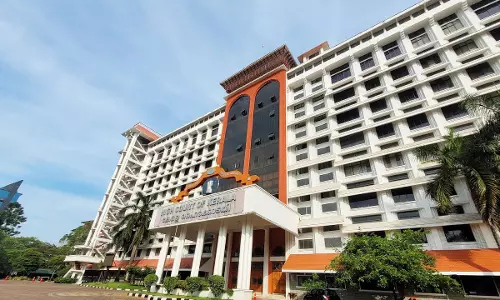
Customs Department Can't Invoke Expired Bank Guarantees: Kerala High Court
The Kerala High Court stated that invocation of the expired bank guarantees by Customs Department is not permissible under law. The Division Bench of Justices A.K. Jayasankaran Nambiar and Easwaran S. was addressing the issue of whether customs department can invoke expired bank guarantees. The assessee/appellant has filed an appeal challenging the order of Single Judge who...
Determination Of Anti-Dumping Duties Is A Time-Bound Process By Competent Authority, Writ Courts Will Be Hesitant To Interfere: Delhi HC
The Delhi High Court has held that writ petitions challenging the determination of anti-dumping duties by Directorate General of Trade Remedies are maintainable however, since the determination is a time bound process, Courts will not readily interfere in the process.Anti-dumping investigation determines whether a product is being dumped in the country at a lower price, causing material injury...
Service Tax Not Leviable On Excess Transportation Charges Recovered From Buyers: CESTAT
The New Delhi Bench of Customs, Excise, and Service Tax Appellate Tribunal (CESTAT) has stated that service tax is not leviable on excess transportation charges recovered from the buyers. The activity of arranging transportation of goods till the dealer's premises cannot be classified under “Business Auxiliary Service” and, therefore, no service tax is payable on...

Vos Technologies Judgment On Time Bound Adjudication Of SCNs Applicable To Recovery Proceedings U/S 11A Of Central Excise Act: Delhi High Court
The Delhi High Court has held that Section 11A of the Central Excise Act 1944, which empowers taxing authorities to recover duties not levied/ short-levied or short-paid, is pari materia to corresponding provisions of the Customs Act, the Finance Act and the CGST Act.A division bench of Justices Yashwant Varma and Harish Vaidyanathan Shankar thus held that the High Court's judgment in M/S...
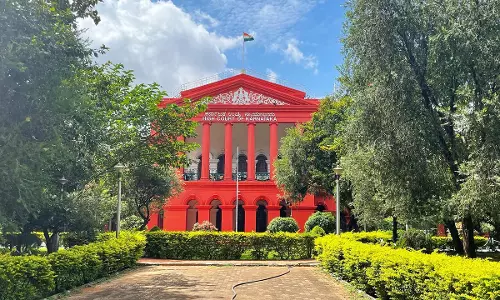
Purchaser Of Residential Property Liable To Pay GST If Property Booked Before Construction Is Completed: Karnataka HC
The Karnataka High Court has reiterated that if the transaction of booking a residential house is entered into before the completion of construction and the consideration was paid (partly or fully) before issuance of completion certificate, the same would amount to supply of services requiring payment of the service tax (GST) by the purchaser. Justice M G S Kamal recently dismissed...