
High Court

Statutory Scheme Determining Taxable Turnover Of Works Contract Under KVAT Act Doesn't Suffer From Any Defect: Kerala High Court
The Kerala High Court has held that the statutory scheme for determining the taxable turnover of a works contract under the Kerala Value Added Tax Act (KVAT Act) does not suffer from any defect so as to render it unworkable to effectuate the charge to tax on a works contract. The bench of Justice A.K. Jayasankaran Nambiar and Justice Syam Kumar V. M. has observed that it was incumbent upon the petitioner or assessee to declare the total turnover (contract receipts) pertaining solely to the works...

Unreasoned Orders By Judicial/ Quasi-Judicial Authorities Violate Natural Justice: Rajasthan High Court Quashes Commercial Tax Assessment Order
The Rajasthan High Court has set aside an assessment order passed by the Commissioner, Commercial Taxes Department, Jaipur (“CCT”) under the Rajasthan Value Added Tax Act, 2003. The Court observed that the assessment order was unreasoned and was passed without any application of mind, violating the principles of natural justice.The assessee had filed his returns for the assessment year 2014-15 claiming input tax credit (“ITC”). However, the demand for ITC was turned down by CCT by passing an...

S.2(e) UPVAT | Plant, Machinery Sold After Closure Of Business Are Capital Goods, Excluded From Levy Of Tax: Allahabad High Court
The Allahabad High Court has held that plant and machinery sold after the closure of business are capital goods under Section 2(f) of the Uttar Pradesh Value Added Tax Act, 2008 and are excluded from levy of tax under the amended definition of 'business' under Section 2(e) of the Act.The definition of 'business' under Section 2(e)(iv) of the Uttar Pradesh Value Added Tax Act, 2008 was amended in 2014 to include any transaction, even after the closure of business, if it relates to sale of goods...
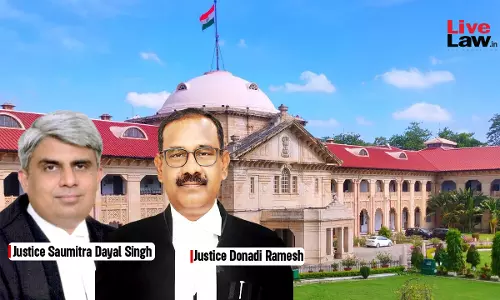
UPVAT | Computation Of Correct ITC Be Examined By Assessing Authority Not Later Than Stage Of Making Regular Assessment Order: Allahabad High Court
The Allahabad High Court has held that computation of correct input tax credit can only be done till the passing of the regular assessment order by the Assessing Authority and not at a later stage. The Court held that reverse input tax credit is neither a 'rate of tax' nor a 'turnover' which can be subjected to reassessment under Section 29 of the Uttar Pradesh Value Added Tax Act, 2008.Section 29 of the UPVAT Act empowers the Assessing Authority to initiate reassessment proceedings against an...

UPVAT | Intention To Evade Tax Essential For Imposition Of Penalty U/S 54(1)(2): Allahabad High Court
The Allahabad High Court has held that intention to evade tax is essential condition for imposing penalty under Section 54(1)(2) of the Uttar Pradesh Value Added Tax Act, 2008.Section 54(1) of the Uttar Pradesh Value Added Tax Act, 2008 provides for circumstances under which penalties can be imposed on an assesee. It is provided that where an assessing authority is satisfied that an assesee has committed any wrong mentioned therein, penalty can be imposed after giving due opportunity of hearing...

S.16 UPVAT Act | Invoices, RTGS Details Not Sufficient For Deciding ITC Claim, Transportation Details Must Be Produced: Allahabad High Court
Placing reliance on the judgment of the Supreme Court in State of Karnataka vs. M/s Ecom Gill Coffee Trading Private Limited, the Allahabad High Court has held that input tax credit cannot be granted based solely on invoices and RTGS payment details.While dealing with Section 70 of the Karnataka Value Added Tax Act, 2003 the Supreme Court in M/s Ecom Gill Coffee Trading Private Limited held that burden to prove that claim for input tax credit and the genuineness of the transaction lies solely on...
S.58 UPVAT | In Revisional Jurisdiction, HC Must Uphold Sanctity Of Judgments/Orders, Must Intervene Only When There Are Compelling Reasons: Allahabad HC
While elaborating the difference between 'appeal' and 'revision', the Allahabad High Court has held that in exercise of its revisional jurisdiction, the High court must uphold the sanctity of judgments and orders and intervene only when there are compelling reasons to do so.“High Courts, in their capacity as revisional bodies, are entrusted with the solemn duty of upholding the sanctity of such judgments and orders, and such, should not lightly disturb them unless compelling reasons of paramount...

Secured Creditor Registered With CERSAI Will Have Precedence Over VAT Authorities Against Proceeds Of Enforcement: Bombay HC
The Bombay High Court recently clarified that in a sale of a mortgaged asset, where the mortgage in favour of a secured creditor is registered prior in time with CERSAI, and the MVAT Authorities too have a charge, the proceeds of the enforcement of the mortgage would first go towards discharging the dues owed to the secured creditor. It is only the residue, if any, after discharging the dues of the mortgagee, that may flow to the MVAT Authorities, added the Court. The High Court...

Madras High Court Directs AO To Allow Transitional Credit Of Purchase Tax Paid Under GST Act If Already Paid under VAT Act
The Madras High Court has directed the Assessing Officer to allow transitional credit of purchase tax paid under Section 140 of the TNGST Act, 2017, if the petitioner had paid “purchase tax” under Section 12(1) of the TNVAT Act.The bench of Justice C. Saravanan has observed that the petitioner deserves a chance to defend the case as the impugned assessment order was passed during the period when the country was in semi-lockdown mode. If the VAT-TDS had indeed remained unutilized for discharging...
S.5 Limitation Act Applies To Rectification Of Orders U/S 31 Of UP VAT Act: Allahabad High Court
The Allahabad High Court has held that Section 5 of the Limitation Act will apply to rectification of orders passed by officer, authority, Tribunal or the High Court under Section 31 of the Uttar Pradesh Value Added Tax Act, 2008.Section 31 of the Uttar Pradesh Value Added Tax Act, 2008 provides that any officer, authority, Tribunal or the High Court may rectify any mistake apparent on the face of record in any of its order either on its own motion or on an application made by parties, within a...
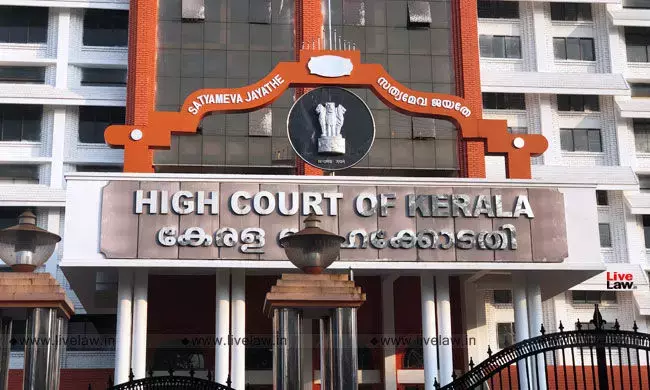
Kerala VAT Act Empowers Taxing Authorities To Recover Tax Dues From Directors Of Private Company: Kerala High Court
The Kerala High Court has held that Section 39 of the Kerala Value Added Tax Act, 2003, empowers the taxing authorities to recover the tax dues from the directors of the private company if the company fails to make payment of the tax.The bench of Justice Dinesh Kumar Singh has observed that when the taxing authorities could not recover the dues from the company, they issued notice for recovery of the said tax dues against the petitioners, who are the directors.The petitioners are the directors...

UPVAT Act | Revision Jurisdiction Of High Court Limited To Questions Of Law, Jurisdictional Errors Or Procedural Irregularities: Allahabad High Court
The Allahabad High Court has held the revision jurisdiction under Section 58 of the Uttar Pradesh Value Added Tax Act, 2008 is limited to questions of law, jurisdictional errors, or procedural. The Court held that the High Court must refrain from going into questions of facts which have been decided by the Tribunal.Section 58 of the Uttar Pradesh Value Added Tax Act, 2008 provides that any person aggrieved by the order passed under Section 57(7) or Section 57(8) of the UPVAT Act can file a...